Back to Articles Image Of The Day

Hidden Wonders: This Small Galaxy is a Powerhouse of New Stars

📖 3 min read 📊 beginner 🏷️ NASA APOD

In Brief

While big, showy spiral galaxies often steal the cosmic spotlight, a lesser-known dwarf galaxy called IC 2574 is proving that size doesn't matter when it comes to making stars. This 'Coddington's Nebula' is currently a bustling nursery, glowing with the telltale red light of intense star birth.
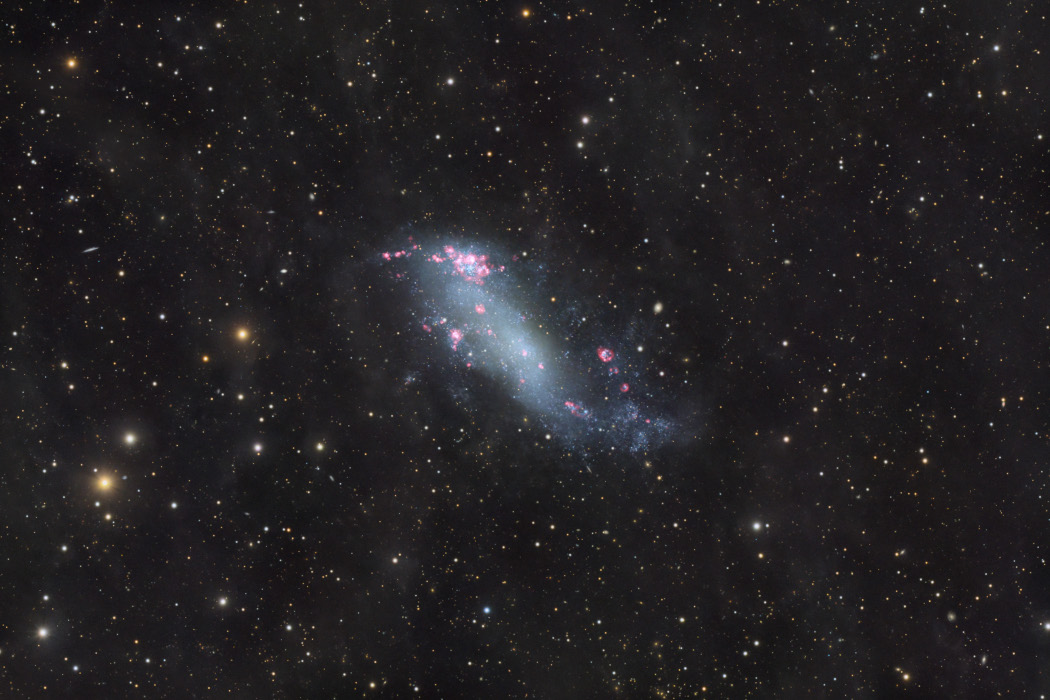
Hidden Wonders: This Small Galaxy is a Powerhouse of New Stars

Disclosure: This post contains affiliate links. As an Amazon Associate, I earn from qualifying purchases.

The Full Story

The universe is full of galactic wonders, and while we often gaze in awe at the majestic, swirling arms of grand spiral galaxies like our Milky Way, a different kind of cosmic neighbor is showing off its own impressive capabilities. Meet IC 2574, affectionately known as Coddington's Nebula – a small, 'irregular' dwarf galaxy that might not have the symmetrical beauty of its larger cousins, but is just as vital and active. Despite its modest size, IC 2574 is far from quiet. Recent observations have revealed clear, vibrant reddish regions scattered throughout its structure. What causes this crimson glow? These are not just pretty colors; they are active nurseries where new stars are being born. The intense radiation from brand-new, massive, hot stars excites the surrounding hydrogen gas clouds, causing them to emit this distinctive red light – a universal beacon signaling active star formation. Why should we care about a small, irregularly shaped galaxy? Dwarf galaxies like IC 2574 are actually the most common type of galaxy in the universe! They are often considered the building blocks of larger galaxies, and by studying how they form stars, scientists can piece together the grand story of galactic evolution. They offer clues about the early universe, where smaller structures were more prevalent before merging into the giant spirals we see today. When astronomers talk about "intense star forming activity," they mean that within these reddish pockets, massive clouds of gas and dust are collapsing under their own gravity, giving birth to many stars at a rapid pace. It's a furious process, churning out hundreds, perhaps even thousands, of new suns, constantly reshaping and energizing the galaxy. This makes IC 2574 a fantastic laboratory for understanding the conditions necessary for star birth, even in environments different from those in grand spirals. This discovery of vigorous star formation in IC 2574, named after its discoverer Edwin Coddington over a century ago, reminds us that the cosmos is incredibly diverse. Every galaxy, no matter its size or shape, plays a role in the ongoing cosmic cycle of birth, life, and death. By appreciating these smaller, energetic powerhouses, we gain a more complete picture of the universe's dynamic history and its incredible capacity for creation.

Key Takeaways

  • 1 Dwarf galaxy IC 2574 is currently experiencing intense star formation.
  • 2 The reddish regions are 'stellar nurseries' where new stars are born from hydrogen gas.
  • 3 Small, irregular galaxies are crucial for understanding the overall evolution of galaxies.
  • 4 This galaxy provides a window into the diverse ways stars are created across the universe.
National Geographic Planisphere Star Finder

National Geographic Planisphere Star Finder

Essential tool for identifying constellations and stars. Perfect for beginners learning the night sky.

Check Price on Amazon
*As an Amazon Associate, we earn from qualifying purchases.

💡 Think of it this way:

Think of it like discovering a thriving, busy craft workshop tucked away in a quiet town, just as productive in its own way as the big, flashy factories in the city.

How We Know This

Scientists use powerful telescopes, both on Earth and in space, to capture detailed images of distant galaxies like IC 2574. By looking at specific colors of light – especially the red light emitted by hydrogen gas – they can pinpoint and study areas where new stars are actively being born. These observations allow astronomers to map out these 'stellar nurseries' and understand the processes happening within them.

What This Means

Understanding the star formation processes in dwarf galaxies like IC 2574 is vital for building more accurate models of how galaxies evolve over billions of years. Future observations will likely focus on measuring the precise rate of star formation, studying the types of stars being born, and investigating how these small galaxies interact with their surroundings. This helps us refine our knowledge of the universe's history, from its earliest moments to its future.

Why It Matters

This glimpse into a dwarf galaxy's energetic life helps scientists understand how galaxies of all shapes and sizes contribute to building the universe around us, including our own cosmic neighborhood. It reveals the often-overlooked dynamism of smaller galactic structures and how they play a role in the grand cosmic story.

Related Topics

#Dwarf Galaxy #Star Formation #Galaxy Evolution #IC 2574 #Astrophysics