Orion's Dazzling Star Nursery: Where Baby Stars Come to Life!
In Brief
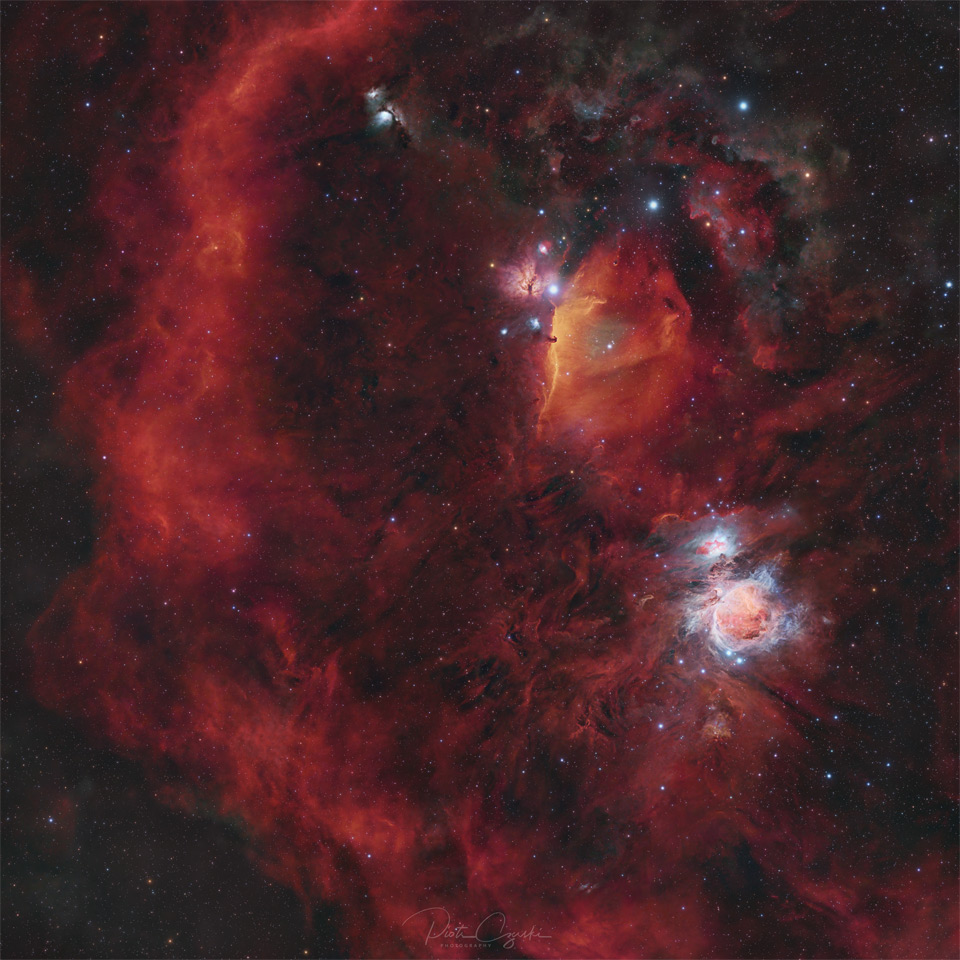
High above us in the familiar constellation Orion, giant clouds of glowing red gas are acting as cosmic cradles, nurturing thousands of brand-new stars. These magnificent star-forming regions, known as stellar nurseries, are where the building blocks of future solar systems are being forged right now, about 1,500 light-years away.
The Full Story
Key Takeaways
- 1 Orion hosts active 'stellar nurseries' where new stars are being born.
- 2 These star-forming regions are vast clouds of glowing red hydrogen gas.
- 3 Studying Orion's cradle helps us understand how our own Sun and solar system formed.
💡 Think of it this way:
Imagine a giant, glowing maternity ward in space! Just like a human nursery is filled with newborns, these cosmic clouds are packed with baby stars, all cradled in the warm, red light of their birthplace.
How We Know This
Astronomers use powerful telescopes, both on Earth and in space, to capture the faint light from these distant stellar nurseries. By observing specific wavelengths of light, particularly the red glow emitted by hydrogen gas when it's energized by nearby hot, young stars, they can map out these immense clouds and pinpoint where star birth is occurring. Different filters and instruments allow them to 'see' through layers of dust and gas that might block visible light, revealing the hidden processes within.
What This Means
The ongoing study of Orion's star nurseries promises to deepen our understanding of star formation, a fundamental process in the universe. Future observations will help scientists track the evolution of nascent stars, identify new exoplanets forming around them, and learn more about the role of giant molecular clouds in galactic evolution. Each new discovery brings us closer to piecing together the grand story of how the cosmos creates and recycles its building blocks, giving rise to new worlds and possibilities.
Why It Matters
Understanding how stars are born helps us unravel the mysteries of our own Sun's origin and how planets like Earth eventually form. It gives us a deeper appreciation for the ongoing cosmic dance that shapes our universe and reminds us of our place within its grand story.