Back to Articles Image Of The Day

The First Untethered Spacewalk: A Human Satellite in the Void

📖 3 min read 📊 beginner 🏷️ NASA APOD

In Brief

Imagine floating completely free in the vastness of space, hundreds of feet from your spaceship. Astronaut Bruce McCandless II achieved this extraordinary feat, becoming the first human to conduct an untethered spacewalk on February 7, 1984. He ventured further into space than anyone before, guided only by a jet-powered backpack.
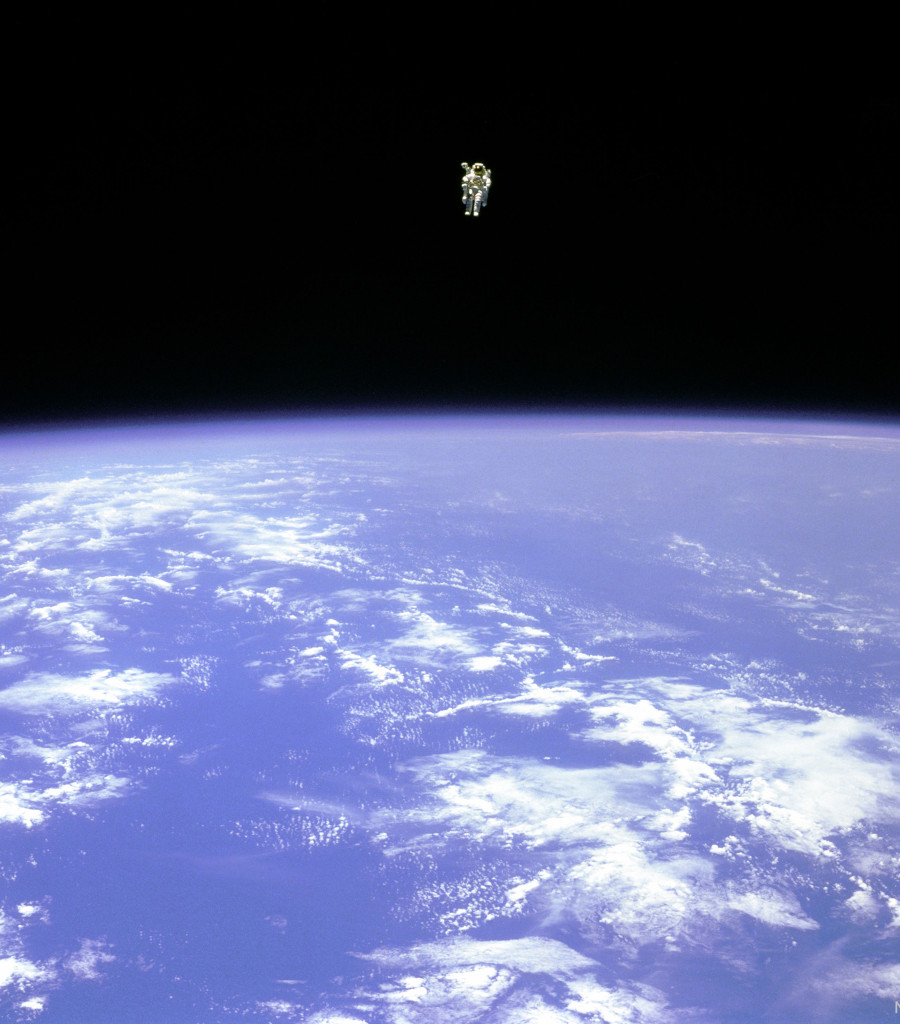
The First Untethered Spacewalk: A Human Satellite in the Void

Disclosure: This post contains affiliate links. As an Amazon Associate, I earn from qualifying purchases.

The Full Story

On February 7, 1984, a lone figure drifted above the Earth, a silent testament to human ambition. Astronaut Bruce McCandless II, part of Space Shuttle Challenger's STS-41B mission, accomplished what was once confined to science fiction: he flew completely free in space. About 100 meters (roughly 330 feet) from the cargo bay, he floated with Earth's majestic blue curve beneath him and the infinite blackness above. The sheer isolation and profound beauty of this moment were captured in an unforgettable photograph, forever etching McCandless into the annals of space history. His remarkable independence was made possible by a groundbreaking piece of technology called the Manned Maneuvering Unit, or MMU. This bulky backpack-like device was revolutionary. Unlike traditional spacewalks where astronauts are tethered to their spacecraft for safety and oxygen, the MMU allowed for complete freedom of movement. It operated using small nitrogen gas thrusters, which McCandless controlled with joysticks, letting him precisely navigate the weightless environment. He could move forward, backward, up, down, and rotate, becoming a truly independent human satellite. The significance of this untethered flight cannot be overstated. Before the MMU, spacewalks were limited by the length of the safety tether, restricting astronauts to areas immediately adjacent to their spacecraft. The MMU opened up vast new possibilities for space operations. It meant astronauts could potentially reach malfunctioning satellites far from the shuttle, assist in the assembly of large space structures, or perform repairs on parts of a spacecraft that were previously inaccessible. It was a giant leap in operational flexibility for human spaceflight. While the MMU itself saw limited use after a few more missions, primarily due to safety concerns and the evolving needs of space station construction, its legacy endures. McCandless's daring flight proved a fundamental concept: humans could operate with an unprecedented level of autonomy in space. It pushed engineers and mission planners to rethink how future spacecraft could be serviced and how astronauts could interact with their environment, influencing the design of robotic arms and other free-flying tools. Beyond the technical achievements, this image resonated deeply with the public. It captured the imagination, embodying humanity's innate desire to explore and conquer new frontiers. McCandless, floating in solitude, became a symbol of courage and ingenuity, inspiring countless individuals to pursue careers in science, engineering, and space exploration. It was a powerful reminder that with innovation and daring, even the most daunting dreams can become reality.

Key Takeaways

  • 1 Astronaut Bruce McCandless II performed the first untethered spacewalk in 1984.
  • 2 He used a Manned Maneuvering Unit (MMU), a jet-powered backpack, to fly freely.
  • 3 This feat demonstrated unprecedented independence and maneuverability for astronauts in space.
  • 4 The event was a major step for future space operations, like satellite servicing and construction, and inspired global fascination.
NASA Mission Patches Collection Set

NASA Mission Patches Collection Set

Collection of iconic NASA mission patches. Great for space enthusiasts and collectors.

Check Price on Amazon
*As an Amazon Associate, we earn from qualifying purchases.

💡 Think of it this way:

It's like unhooking from your safety line during a mountain climb and using a personal jetpack to explore a new peak, but instead of mountains, it's the ultimate frontier: the vacuum of space itself.

How We Know This

Astronaut McCandless used a specialized personal propulsion system called the Manned Maneuvering Unit (MMU). This backpack-like device contained 24 small thrusters that expelled pressurized nitrogen gas. By manipulating hand controls, McCandless could activate specific thrusters to move himself precisely in any direction, effectively becoming a self-propelled human spacecraft without any physical connection to the Space Shuttle Challenger.

What This Means

Although the MMU wasn't widely adopted for routine use, McCandless's pioneering flight proved the viability of untethered human operations in space. This groundwork was crucial for the development of future robotic systems and advanced tools for satellite repair, space station assembly, and eventually, human exploration beyond Earth orbit. It continues to inform concepts for future extravehicular activities (EVAs) and how humans might interact with environments on the Moon or Mars with greater mobility and independence.

Why It Matters

This iconic moment showcased humanity's incredible courage and ingenuity, pushing the boundaries of what's possible in space exploration. It demonstrated new capabilities for space station maintenance, satellite retrieval, and future missions, inspiring generations to look to the stars.

Related Topics

#Spacewalk #Astronaut #MMU #NASA #Space Exploration