Back to Articles Image Of The Day

Unmasking the Moon's Dark 'Seas': A Glimpse into its Fiery Past

πŸ“– 3 min read πŸ“Š beginner 🏷️ NASA APOD

In Brief

For centuries, people thought the Moon's dark, smooth areas were vast oceans and named them accordingly. We now know these lunar 'seas' are actually immense plains of solidified ancient lava, making the old names a charming historical irony.
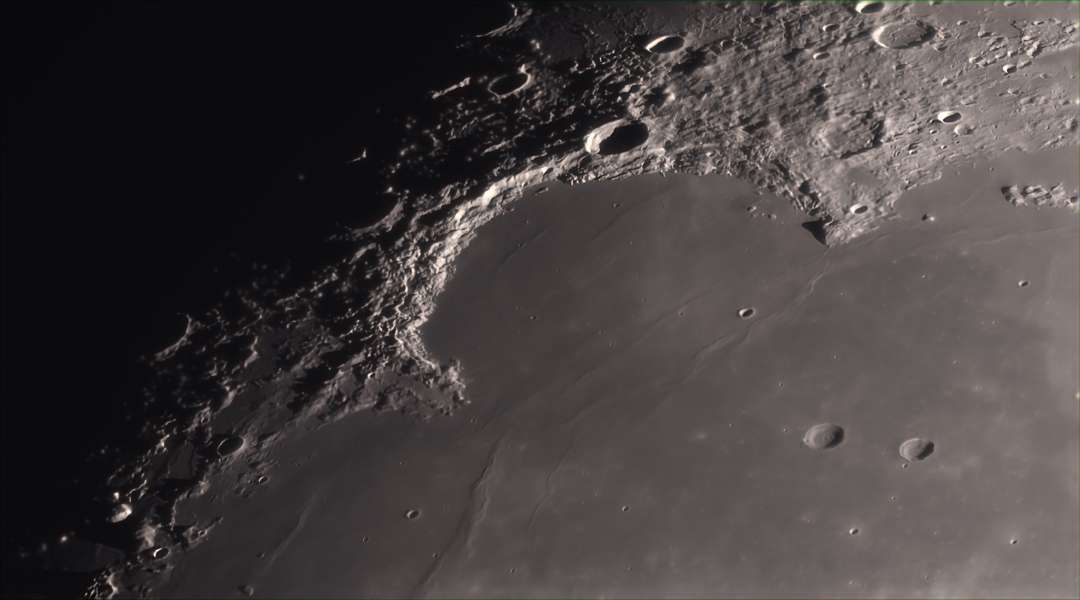
Unmasking the Moon's Dark 'Seas': A Glimpse into its Fiery Past

Disclosure: This post contains affiliate links. As an Amazon Associate, I earn from qualifying purchases.

The Full Story

Look up at the full Moon, and you'll easily spot its distinctive face – bright highlands peppered with craters, and darker, smoother patches. For generations, these dark areas were believed to be actual bodies of water, hence their poetic Latin names like 'Mare Tranquillitatis' (Sea of Tranquility) or 'Sinus Iridum' (Bay of Rainbows). Early astronomers, peering through rudimentary telescopes, saw these vast, smooth expanses and naturally assumed they were watery bodies, similar to Earth's oceans. This ancient naming convention, born from limited telescopic views, paints a misleading picture for us 'denizens of the space age.' Thanks to modern astronomy and numerous lunar missions, we now know the Moon is a remarkably dry and airless world. Those smooth, dark regions aren't water at all; they are colossal plains of volcanic rock, formed billions of years ago when molten material surged from the Moon's interior. These lunar 'seas,' or *maria* (plural for *mare*), are actually immense basins created by impacts from asteroids or comets. After these massive collisions, the Moon's interior, still hot from its formation, began to ooze dark, basaltic lava upwards through cracks in the surface. Over millions of years, these lava flows flooded the basins, smoothing them out and eventually solidifying into the flat, dark landscapes we see today. Take the 'Bay of Rainbows,' or *Sinus Iridum*, for example. It's a particularly striking example of these lava plains, appearing as a smooth, arc-shaped indentation on the Moon's northwest limb. It's not a bay with crashing waves, but rather a beautifully sculpted ancient lava bed, a testament to the Moon's fiery past, reflecting sunlight differently than the brighter, more rugged highlands due to its composition and smoothness. The names, though scientifically inaccurate by today's standards, have stuck – a charming nod to history and the evolving journey of human discovery. It’s a powerful reminder that what we perceive initially can be dramatically different from reality once we get a closer look. These labels now serve as a bridge between humanity's earliest astronomical observations and our current, detailed understanding of our closest celestial neighbor, revealing a far more dynamic and volcanic past than initially imagined.

Key Takeaways

  • 1 The Moon's dark, smooth regions, historically called 'seas' (maria), are actually vast plains of solidified lava.
  • 2 These lava plains formed billions of years ago when volcanic eruptions filled impact basins.
  • 3 The ancient Latin names persist as a historical legacy, highlighting the evolution of our scientific understanding of the Moon.
Celestron NexStar 130SLT Computerized Telescope

Celestron NexStar 130SLT Computerized Telescope

Computerized telescope perfect for beginners. Features a 130mm aperture and automated tracking to explore the night sky.

Check Price on Amazon
*As an Amazon Associate, we earn from qualifying purchases.

πŸ’‘ Think of it this way:

Imagine looking at an old, faded map of Earth where explorers, without proper tools, labeled a huge desert 'The Great Lake.' That's a bit like how we used to see the Moon!

How We Know This

How do we know the Moon's 'seas' are made of lava? Early telescopes allowed us to map their smooth nature, but it was truly the Apollo missions in the 1960s and 70s that confirmed their volcanic origin. Astronauts landed on these 'seas,' brought back rock samples (which turned out to be basalt, very similar to volcanic rock found on Earth), and deployed instruments that measured the Moon's composition and internal structure. Today, lunar orbiters use radar and spectrometers to map these areas in even greater detail, confirming their volcanic origin without a doubt.

What This Means

Understanding the Moon's volcanic history is crucial for piecing together its entire geological timeline and even provides clues about the early Solar System. It helps scientists understand where resources might be found, guides the selection of safe landing sites for future missions, and sheds light on how rocky planets evolve. As humanity plans to return to the Moon and establish long-term bases, knowing the terrain's origin and composition is incredibly valuable for sustainable exploration and future scientific endeavors.

Why It Matters

Understanding these features helps us grasp the Moon's violent geological history and appreciate how scientific knowledge evolves as we explore our universe.

Related Topics

#lunar geology #Moon #maria #volcanoes #space exploration