Giant Galaxy Devours Neighbors in Cosmic Feeding Frenzy
In Brief
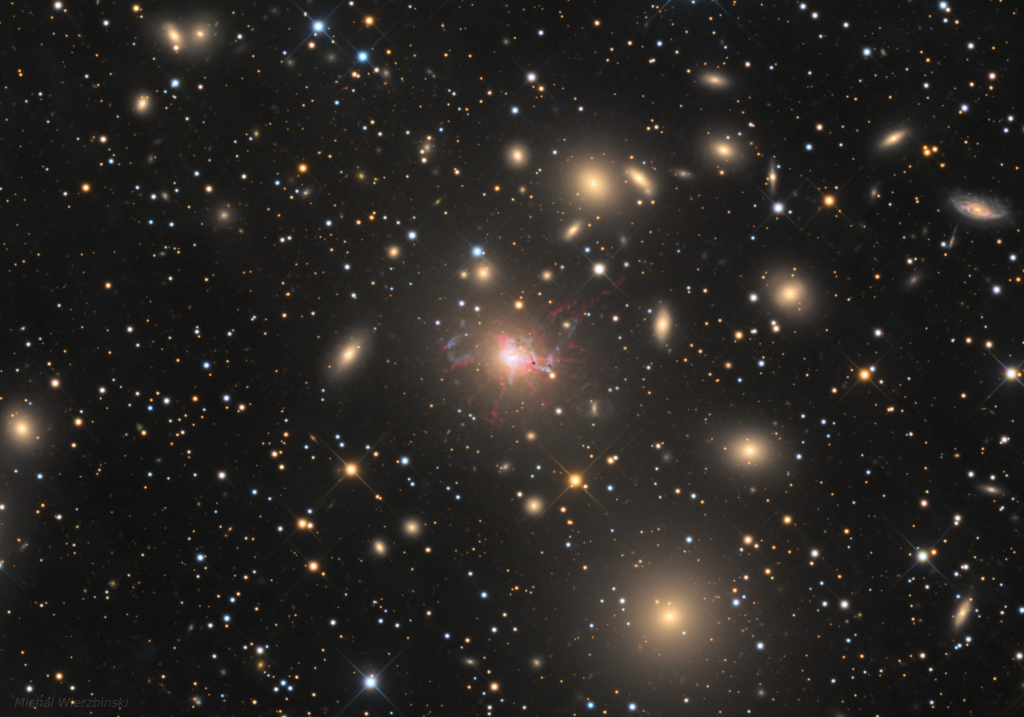
Astronomers are studying NGC 1275, a colossal galaxy at the heart of the nearby Perseus Cluster. This "active" galaxy is a cosmic cannibal, voraciously pulling in and devouring smaller galaxies, radiating immense energy as it feeds.
The Full Story
Key Takeaways
- 1 NGC 1275 is a massive "active galaxy" at the center of the Perseus Cluster.
- 2 It grows by devouring entire smaller galaxies, a process called accretion.
- 3 This cosmic feeding frenzy generates huge amounts of X-ray and radio emissions.
- 4 Studying NGC 1275 helps us understand how massive galaxies and galaxy clusters evolve.
💡 Think of it this way:
Imagine a massive, hungry city that grows by slowly absorbing smaller towns and villages around it, generating huge amounts of light and heat in the process.
How We Know This
Astronomers use powerful telescopes to observe NGC 1275 across different parts of the electromagnetic spectrum. Visible light telescopes show us its "wild" appearance, while specialized X-ray telescopes like NASA's Chandra Observatory and radio telescopes pick up the powerful emissions generated by the feeding process. By combining these different "views," scientists can piece together a complete picture of this dynamic galaxy.
What This Means
Continued study of NGC 1275 will provide crucial data on the life cycles of galaxy clusters and the role of supermassive black holes in galaxy evolution. It could help predict the ultimate fate of smaller galaxies within clusters and shed light on how the universe's largest structures have come to be, and how they might continue to change in the distant future.
Why It Matters
This dramatic process helps us understand how the largest galaxies grow over billions of years and reveals the violent, dynamic nature of the universe we live in.