NGC 1512: A Galaxy with Three Rings – A Cosmic Rarity!
In Brief
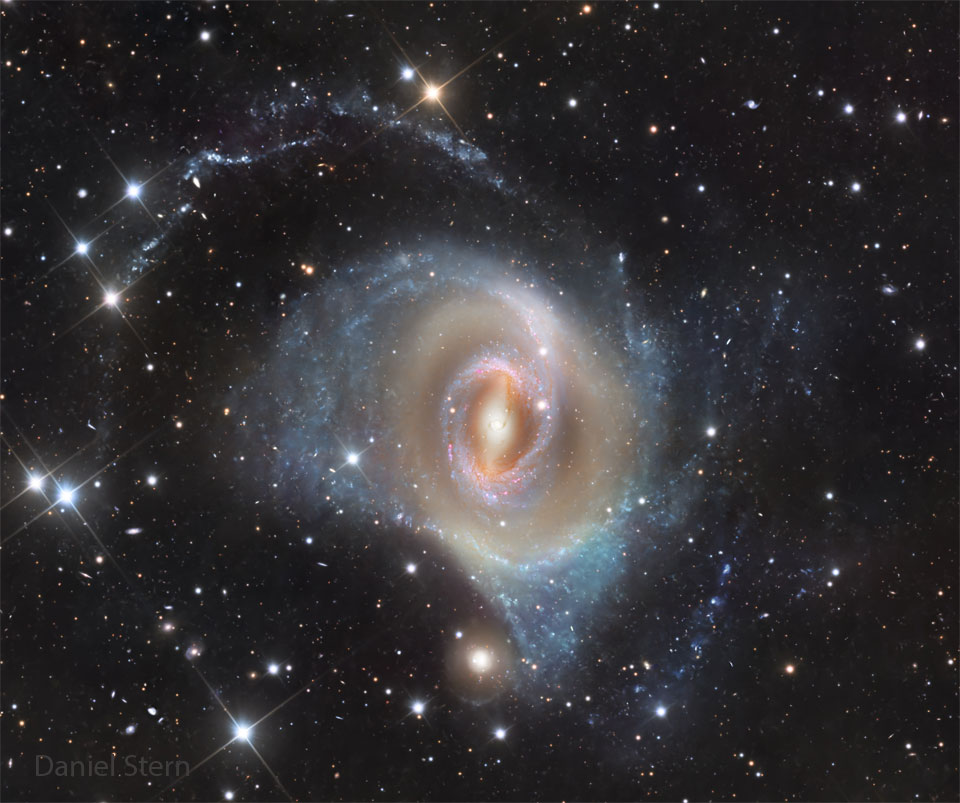
Astronomers are captivated by NGC 1512, a spiral galaxy boasting not one, but three distinct rings, a truly rare sight in the cosmos. These rings offer a spectacular view into different stages of star birth and the galaxy's dynamic evolution, providing valuable clues about how galaxies grow and change.
The Full Story
Key Takeaways
- 1 NGC 1512 is a rare spiral galaxy featuring three distinct rings, a unique phenomenon in the cosmos.
- 2 Each ring represents different stages of star formation and galactic processes, from intense star birth in the nuclear ring to dynamic flows in the outer rings.
- 3 Studying these complex ring structures provides crucial insights into how galaxies evolve, form new stars, and are shaped by internal and external forces over billions of years.
💡 Think of it this way:
Imagine a cosmic bullseye or a set of nested hula hoops, with each ring in NGC 1512 representing a distinct zone of activity, from intense star birth at the center to swirling dust and older stars further out.
How We Know This
Astronomers use advanced telescopes, like the Hubble Space Telescope, to capture high-resolution images of galaxies. By analyzing the various wavelengths of light emitted from different parts of a galaxy – including its colors, brightness, and spectral signatures – they can identify the presence of gas, dust, and young or old stars, thereby mapping out intricate structures like these rings.
What This Means
This discovery enriches our understanding of galaxy formation and evolution, suggesting that complex internal dynamics and possibly past cosmic interactions can shape galaxies in extraordinary ways. It provides valuable 'blueprints' for modeling how other galaxies, including our own Milky Way, might have developed their structures, pushing the frontiers of astrophysical knowledge.
Why It Matters
Studying these unusual rings helps scientists understand how galaxies grow, form new stars, and evolve over billions of years, giving us clues about our own Milky Way's past and future.