Webb Reveals Cosmic Spider's Intricate Web: The Red Spider Nebula
In Brief
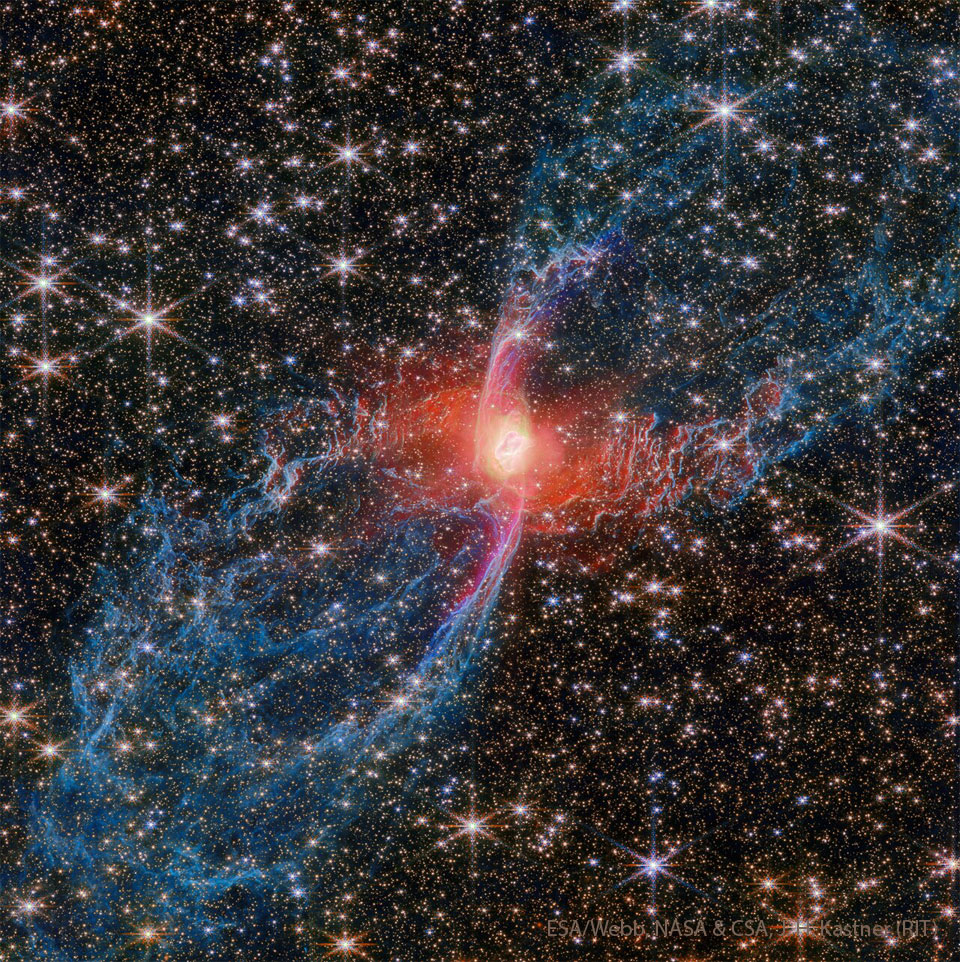
NASA's James Webb Space Telescope has captured an extraordinary, detailed view of the Red Spider Nebula, showcasing a star's dramatic final act. This stunning, two-lobed structure is formed as a dying star sheds its outer gases, creating a beautiful cosmic masterpiece.
The Full Story
Key Takeaways
- 1 The James Webb Space Telescope has delivered a stunning, detailed image of the Red Spider Nebula.
- 2 This nebula reveals how stars similar to our Sun create incredibly complex structures as they die.
- 3 Studying these cosmic webs helps us understand stellar evolution, including the future of our own Sun.
- 4 The intricate shapes are sculpted by super-hot stellar winds from the central white dwarf star.
💡 Think of it this way:
Imagine a star, much like a cosmic artist, intricately weaving a dazzling, glowing web as it prepares for its final transformation. The Red Spider Nebula is exactly that – a star's beautiful, albeit messy, last artistic creation before becoming a tiny, dense core.
How We Know This
The James Webb Space Telescope (JWST) captured this incredible image. Webb specializes in seeing infrared light, which allows it to peer through dust clouds and reveal details and temperatures that older telescopes couldn't, giving us a clearer, more vibrant view of these distant, glowing structures.
What This Means
These detailed observations from Webb will help astronomers create better computer models of stellar evolution, predicting how stars, including our own Sun, will transform at the end of their lives. It also helps us understand how elements essential for life are spread throughout the galaxy, providing crucial context for the universe's chemical enrichment.
Why It Matters
By studying spectacular objects like the Red Spider Nebula, we gain insight into how stars, including our own Sun, will eventually end their lives, shaping the universe around us and creating new cosmic materials.