Orion's Running Man: A Cosmic Dance of Dust and Starlight
In Brief
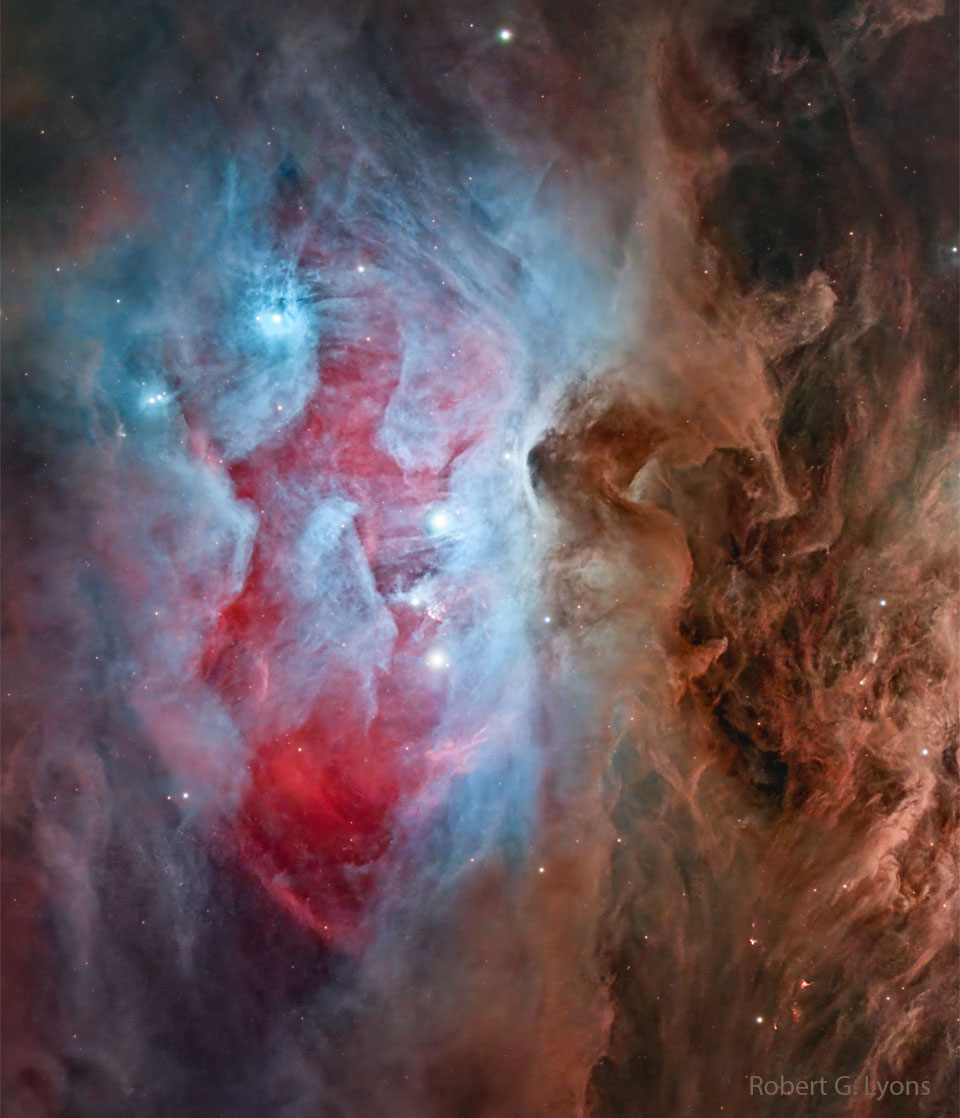
High above the famous Orion Nebula lies a breathtaking cosmic cloud called the Running Man Nebula. This celestial nursery is where new stars are born, with shimmering blue dust clouds reflecting their brilliant light, painting a stunning portrait in the night sky.
The Full Story
Key Takeaways
- 1 The Running Man Nebula is a beautiful star-forming region located north of the famous Orion Nebula.
- 2 It's a 'reflection nebula,' meaning its blue glow comes from cosmic dust reflecting the light of nearby bright, young stars.
- 3 This region is a 'stellar nursery' where new stars are actively being born from collapsing clouds of gas and dust.
💡 Think of it this way:
Imagine a dusty road at night where your car's headlights illuminate the tiny dust particles, making them glow. The Running Man Nebula is similar, but instead of headlights, it's brilliant baby stars lighting up cosmic dust.
How We Know This
Images of the Running Man Nebula, like those shared by NASA's APOD, are created using powerful telescopes. These instruments collect light from faint cosmic objects over extended periods, sometimes many hours, to reveal intricate details and the stunning colors of distant nebulae.
What This Means
Studying regions like the Running Man Nebula helps scientists understand how stars, including our own Sun, are born and evolve. This knowledge is crucial for comprehending the formation of planetary systems, the distribution of chemical elements vital for life throughout the galaxy, and the overall life cycle of the universe. Continued observations will further refine our models of stellar evolution and cosmic nurseries.
Why It Matters
It helps us understand how stars like our Sun are created from vast clouds of gas and dust, giving us clues about the origins of our own solar system and perhaps even life itself.