Back to Articles Image Of The Day

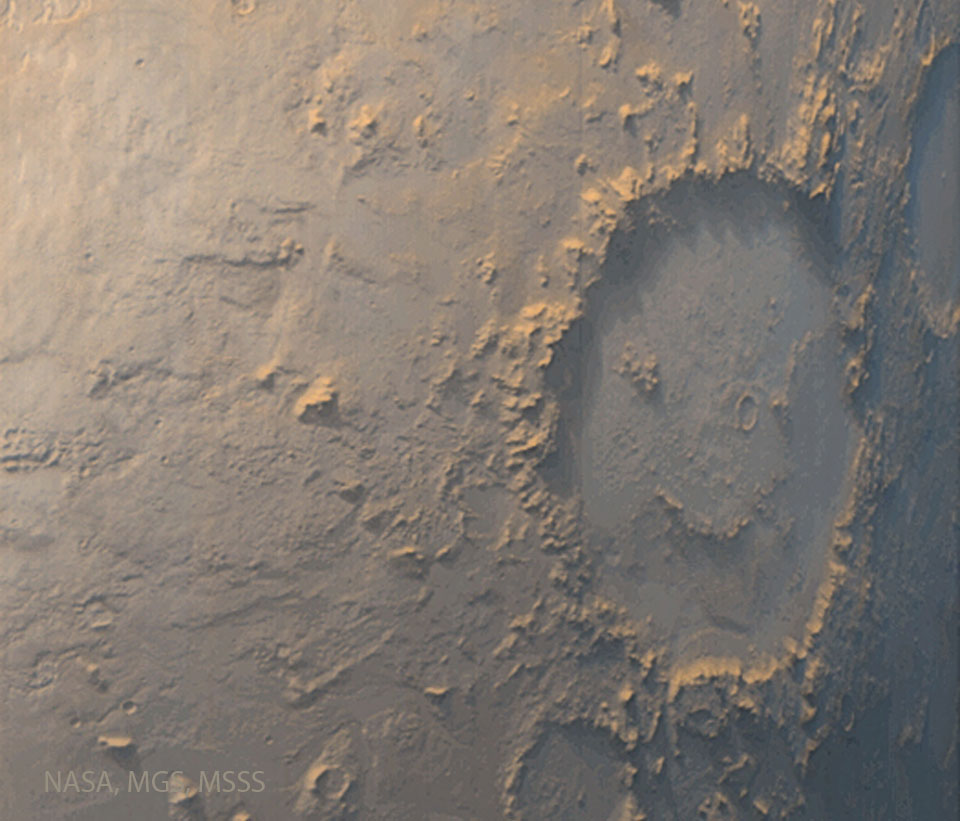
Mars Winks! Discover the Happy Face Crater on the Red Planet

📖 3 min read 📊 beginner 🏷️ NASA APOD

In Brief

Meet Galle Crater, a unique feature on Mars that remarkably resembles a smiling, winking face! First spotted by the Viking Orbiter in the 1970s, this Martian landmark continues to fascinate scientists and stargazers alike. It's a fun reminder of how we find familiar patterns even in alien landscapes.
Mars Winks! Discover the Happy Face Crater on the Red Planet

Disclosure: This post contains affiliate links. As an Amazon Associate, I earn from qualifying purchases.

The Full Story

Deep within the southern hemisphere of Mars lies a peculiar crater named Galle. What makes this particular impact crater stand out from the millions of others dotting the Martian surface? Its internal features create an uncanny resemblance to a smiling, winking face, earning it the affectionate nickname 'the Happy Face Crater.' This captivating illusion is formed by the crater's distinct central peaks, which appear like eyes, and a curved ridge at the bottom that forms a wide grin. The human tendency to see faces or familiar patterns in random objects is a psychological phenomenon called pareidolia. It's the same reason we might see animals in cloud formations or faces on pieces of toast. On Mars, this natural human trait led to the delightful discovery of Galle Crater. While it's not a literal Martian emoji, the configuration of its geological features makes for an incredibly compelling and memorable image that has captured public imagination for decades. The initial discovery of the 'happy face' was made in the 1970s by NASA's Viking Orbiter spacecraft, which meticulously mapped the Martian surface. Years later, with advancements in technology, the Mars Global Surveyor (MGS) mission provided even more detailed and higher-resolution images of Galle Crater. These improved views confirmed the smiling visage and allowed scientists to study its geological structures with greater clarity, revealing the intricate details that contribute to this cosmic illusion. Scientifically, Galle Crater is a fascinating example of how impact craters evolve over time. The 'eyes' are likely central peaks or smaller craters within the larger basin, while the 'mouth' is a curved escarpment or ridge. Studying such formations helps planetary geologists understand the processes of impact, erosion, and sedimentation on Mars. It provides valuable clues about the planet's history, including volcanic activity, water flow, and atmospheric conditions that have shaped its landscape over billions of years. Though we see a face, scientists see a complex geological canvas. Ultimately, the 'Happy Face Crater' is more than just a novelty; it's an ambassador for Mars exploration. It serves as a lighthearted entry point into the serious science of planetary geology, demonstrating how even seemingly random features can hold scientific significance. It encourages us to look closer at the world—and worlds—around us, reminding us that there's always something new and unexpected waiting to be discovered, whether it's a geological marvel or a familiar pattern in the stars.

Key Takeaways

  • 1 Galle Crater on Mars is famous for its 'happy face' appearance, complete with a smile and winking eyes.
  • 2 This illusion is an example of pareidolia, where humans see familiar patterns in random shapes.
  • 3 The crater's features were first observed by the Viking Orbiter in the 1970s and later imaged in higher detail by the Mars Global Surveyor.
  • 4 Beyond its fun appearance, Galle Crater helps scientists study Martian geology, impact processes, and the planet's history.
Hubble Space Telescope Deep Field Poster

Hubble Space Telescope Deep Field Poster

Stunning poster featuring iconic Hubble Space Telescope imagery. Perfect for space enthusiasts.

Check Price on Amazon
*As an Amazon Associate, we earn from qualifying purchases.

💡 Think of it this way:

Imagine looking up at the clouds and seeing a dog or a dragon. That's a bit like what happened with Galle Crater, but on a cosmic scale! Our brains are wired to find patterns, even in random shapes, creating familiar 'faces' where there might just be rocks and shadows.

How We Know This

The 'happy face' of Galle Crater was discovered and observed using robotic spacecraft orbiting Mars. Missions like the Viking Orbiter and later the Mars Global Surveyor (MGS) carried powerful cameras designed to photograph and map the Martian surface from above. These orbiters circled the planet, taking countless high-resolution images that were then transmitted back to Earth, allowing scientists to piece together detailed maps and study specific features like Galle Crater.

What This Means

The 'Happy Face Crater' continues to be a popular image that helps to engage the public with space exploration and the wonders of our solar system. For scientists, features like Galle Crater offer invaluable insights into the geological history of Mars. By studying the formation and erosion of such large impact structures, we can learn more about the planet's past environment, potential for ancient water, and how its surface has evolved, all of which inform future missions to the Red Planet, including the search for past or present life.

Why It Matters

This discovery reminds us that even distant planets can hold surprising, relatable features that spark our imagination and connect us to the wonders of space exploration. It's a perfect example of how human perception shapes our view of the cosmos, making scientific discoveries feel more personal and engaging.

Related Topics

#Mars #Galle Crater #Pareidolia #Space Exploration #Planetary Geology