Cosmic Nursery: Where New Stars Are Born!
In Brief
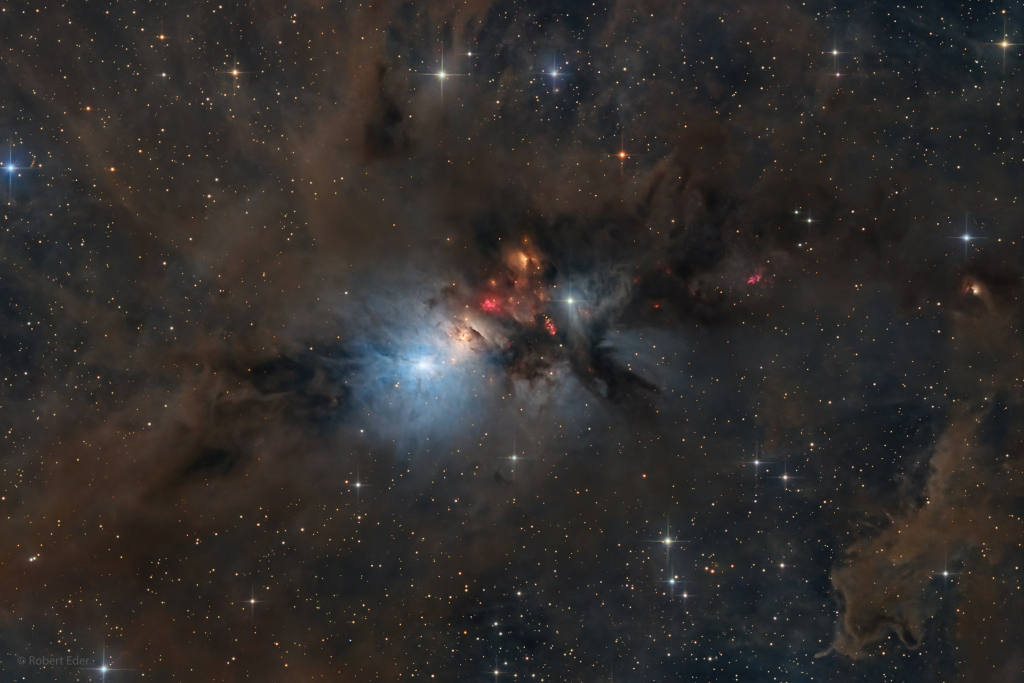
NGC 1333 is a vibrant 'stellar nursery' located just 1,000 light-years away in the Perseus constellation, dazzling us with brilliant blue light. It's a region where new stars are actively forming from vast clouds of gas and dust. This captivating image offers a close-up look at one of the universe's busiest cosmic construction zones.
The Full Story
Key Takeaways
- 1 NGC 1333 is a 'stellar nursery' actively forming new stars.
- 2 It's a 'reflection nebula' that glows blue by reflecting starlight from nearby young stars.
- 3 Located relatively close at 1,000 light-years away in the Perseus constellation.
- 4 Studying it helps us understand how our Sun and planets were formed.
- 5 Telescopes observing visible light are key to its study.
💡 Think of it this way:
Imagine a giant cosmic construction site, but instead of buildings, brand new baby stars are being assembled from the universe's raw materials!
How We Know This
Astronomers use powerful telescopes to capture the visible light reflecting off the dust and gas in NGC 1333. By analyzing the colors and patterns of this reflected light, they can infer the presence of young stars, the composition of the interstellar dust, and the dynamic processes of star formation occurring within the nebula.
What This Means
Further studies of NGC 1333 will continue to refine our understanding of how stars and planetary systems are born. This knowledge is fundamental to astrophysics, helping us build more accurate models of stellar evolution, the formation of exoplanets, and ultimately, the conditions necessary for life to emerge elsewhere in the cosmos.
Why It Matters
Studying places like NGC 1333 helps us understand how our own Sun and Earth came into existence. By observing these cosmic cradles, we gain profound insights into the origins of stars, planets, and ultimately, ourselves.