Back to Articles Image Of The Day

The Hook Galaxy: A Galactic Beauty Twisted by Cosmic Forces

πŸ“– 3 min read πŸ“Š beginner 🏷️ NASA APOD

In Brief

Astronomers have captured a stunning image of NGC 2442, affectionately nicknamed the 'Hook Galaxy,' located in the southern sky. This majestic spiral galaxy appears dramatically distorted, with its two arms stretching out from a central bar, creating a unique hook-like shape. It's an incredible view into the dynamic lives of galaxies far, far away.
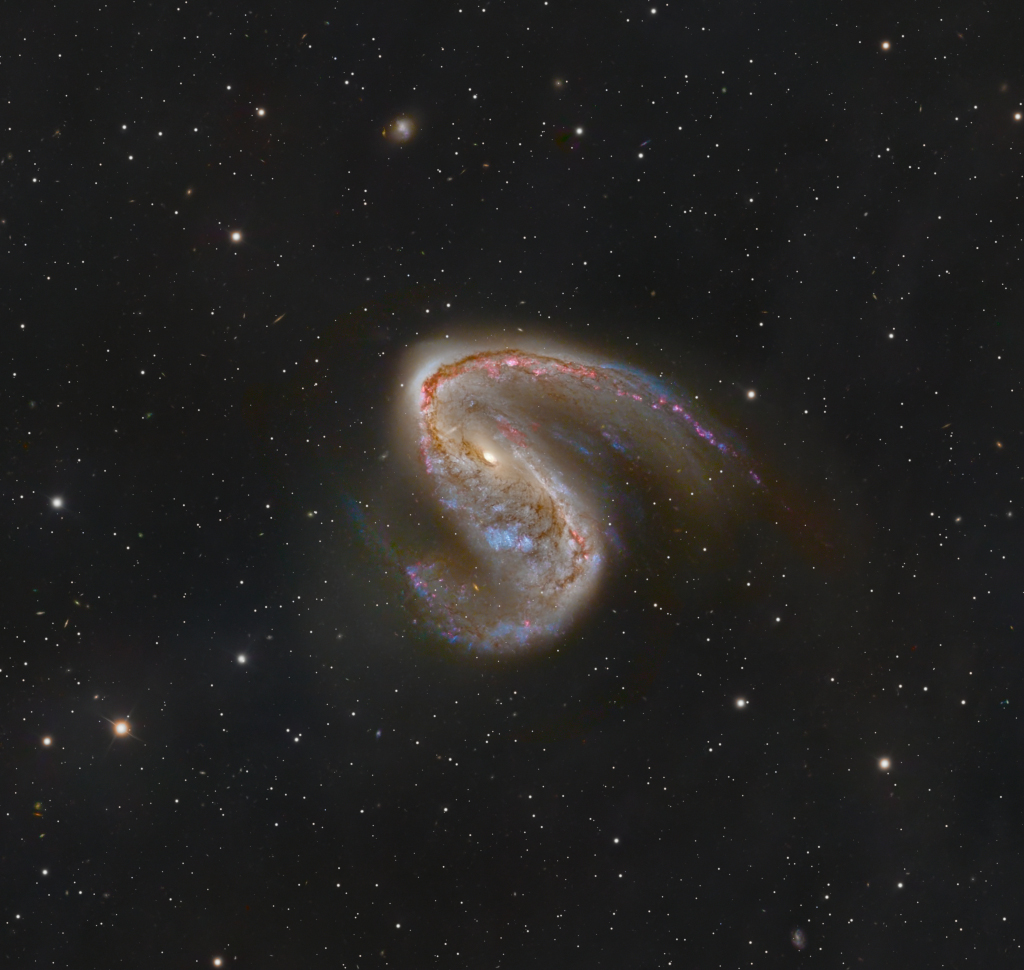
The Hook Galaxy: A Galactic Beauty Twisted by Cosmic Forces

Disclosure: This post contains affiliate links. As an Amazon Associate, I earn from qualifying purchases.

The Full Story

Deep in the southern reaches of our night sky, nestled within the faint constellation of Volans, the 'flying fish,' lies a celestial marvel known as NGC 2442. But don't let its humble constellation name fool you; this galaxy is anything but ordinary. Astronomers have affectionately nicknamed it the 'Hook Galaxy' due to its dramatically distorted appearance, resembling a giant cosmic question mark or a beautifully twisted piece of art. This captivating image reveals a galaxy caught in a dynamic embrace, its usual elegant spiral structure pulled and stretched into something truly unique. This galactic spectacle is located an astounding 50 million light-years away from Earth. To put that into perspective, when the light from NGC 2442 began its long journey across the universe towards our telescopes, dinosaurs had already been extinct for millions of years, and our own planet was a very different place. When we gaze upon this 'Hook Galaxy,' we're not seeing it as it looks today, but rather as it appeared 50 million years ago. It’s like a cosmic time machine, offering us a glimpse into the ancient past of a distant galaxy. The Hook Galaxy's unusual shape isn't just a random cosmic quirk; it's likely a testament to the powerful gravitational forces at play in the universe. Most spiral galaxies, like our own Milky Way, have a more symmetrical appearance. The dramatic stretch and bend in NGC 2442's arms, extending from a pronounced central bar, suggest that it might have had a close encounter with another galaxy in its past. Such gravitational 'nudges' can pull and reshape a galaxy, triggering waves of star formation and creating these stunning, asymmetrical patterns that captivate our imagination. Studying galaxies like NGC 2442 provides astronomers with invaluable insights into how galaxies evolve and interact over cosmic timescales. These 'snapshots' of galactic drama help us piece together the grand narrative of the universe – from the formation of stars and planets to the majestic collisions and mergers that sculpt entire galactic structures. By observing these distant, distorted wonders, we gain a deeper appreciation for the dynamic, ever-changing nature of the cosmos and our place within it.

Key Takeaways

  • 1 NGC 2442, known as the 'Hook Galaxy', is a dramatically distorted spiral galaxy located 50 million light-years away.
  • 2 Its unusual hook-like shape is likely the result of powerful gravitational interactions with another cosmic body in its past.
  • 3 Observing and studying such unique galaxies helps scientists understand the processes of galaxy evolution and interaction across the universe.
Hubble Space Telescope Deep Field Poster

Hubble Space Telescope Deep Field Poster

Stunning poster featuring iconic Hubble Space Telescope imagery. Perfect for space enthusiasts.

Check Price on Amazon
*As an Amazon Associate, we earn from qualifying purchases.

πŸ’‘ Think of it this way:

Imagine watching a cosmic ballet in slow motion, where a galaxy gets gently pulled and stretched by invisible forces, much like a master sculptor molding clay into an exquisite new form.

How We Know This

This breathtaking image was captured using powerful telescopes, likely through what astronomers call a 'deep and colorful' exposure. This means the telescope collected light over a long period, allowing it to gather faint details and showcase the vibrant colors of stars, gas, and dust within the galaxy. Specialized cameras on these telescopes act like incredibly sensitive digital eyes, enabling us to peer across vast cosmic distances and see light that has traveled for millions of years.

What This Means

Astronomers will continue to observe galaxies like the Hook Galaxy using advanced telescopes, including those that can see in different types of light (like X-rays or radio waves). This multi-wavelength approach helps reveal hidden processes, such as active star formation triggered by the distortion, or the presence of dark matter that shapes the galaxy's gravitational field. Understanding these unique galaxies helps refine our models of galaxy formation and offers clues about the ultimate fate of our own Milky Way as it continues its cosmic journey.

Why It Matters

Observing unique galaxies like the Hook Galaxy helps us understand how these massive star systems evolve, interact, and change their shapes over cosmic timescales. These insights give us clues about the universe's grand past and what might lie ahead for our own galaxy.

Related Topics

#Galaxy #Astronomy #Space #NGC 2442 #Spiral Galaxy