M78: Orion's Blue Cosmic Mirror
In Brief
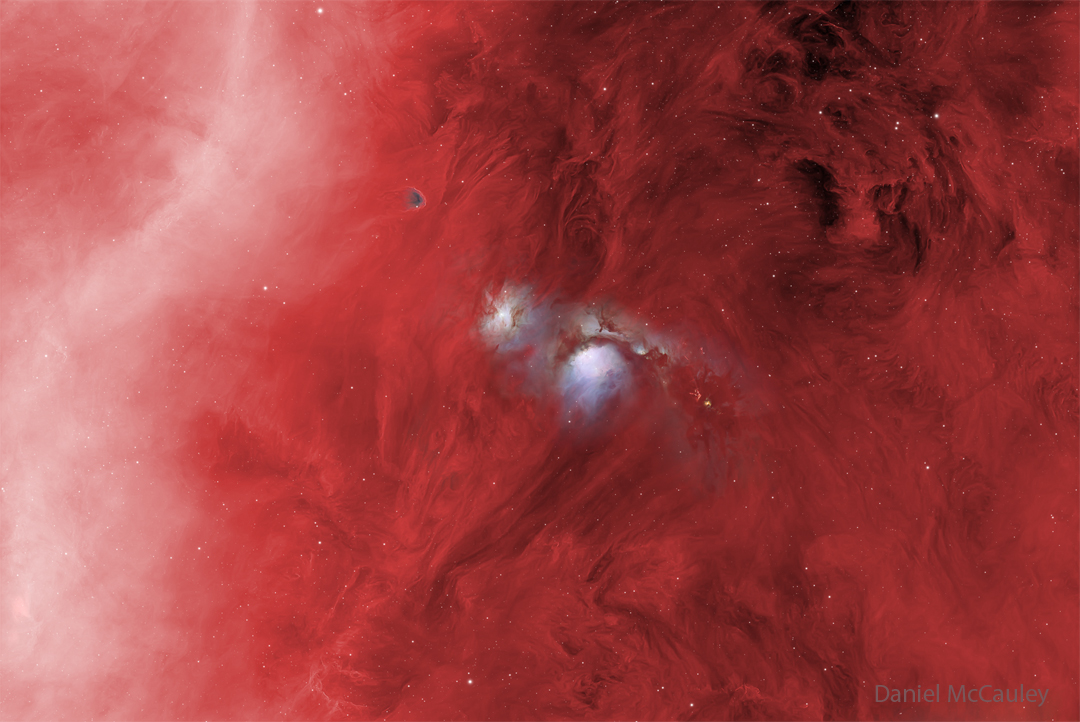
Deep within the famous Orion constellation, a stunning nebula named M78 shines with a brilliant blue light. This cosmic cloud isn't making its own light; instead, it's reflecting the glow of hidden newborn stars, much like dust motes dancing in a sunbeam. It offers a spectacular view into a bustling stellar nursery, helping us understand star birth.
The Full Story
Key Takeaways
- 1 M78 is a 'reflection nebula' in the Orion constellation, glowing blue by reflecting starlight.
- 2 Its blue color is due to dust particles scattering blue light more efficiently, similar to why Earth's sky is blue.
- 3 Located in the Orion Molecular Cloud complex, it's a region where new stars are forming, surrounded by other types of nebulas.
- 4 Studying M78 helps scientists understand interstellar dust and the intricate processes of star birth.
💡 Think of it this way:
Imagine dust motes illuminated by a flashlight beam in a dark room; the dust itself doesn't glow, but it beautifully reflects the light source. M78 does something similar with starlight, acting as a cosmic mirror.
How We Know This
Astronomers use powerful telescopes, both on Earth (like the Kitt Peak National Observatory, where some APOD images originate) and in space (like the Hubble Space Telescope), to capture the faint light from these distant nebulas. By analyzing the colors and patterns of light, they can deduce what the clouds are made of, the temperature and type of stars illuminating them, and how these celestial objects are interacting with their environment. Specialized cameras with filters allow them to isolate specific wavelengths of light to build detailed images.
What This Means
Studying nebulas like M78 continues to refine our understanding of how stars and planetary systems form from these vast cosmic clouds. Future observations with advanced telescopes, such as the James Webb Space Telescope, could reveal even more about the chemical composition of the dust in M78, the earliest stages of planet formation around its embedded stars, and the dynamic processes that shape these stellar nurseries, potentially giving us clues about our own solar system's origins.
Why It Matters
Understanding reflection nebulas like M78 helps scientists learn how stars are born and how their light interacts with the vast amounts of dust and gas that fill our galaxy, ultimately shedding light on our cosmic origins and the building blocks of planets.