Back to Articles Image Of The Day

Orion's Belt Shines Bright Above Snowy Peaks: A Winter Wonderland of Stars

📖 3 min read 📊 beginner 🏷️ NASA APOD

In Brief

A breathtaking new photo captures the famous Orion constellation sparkling over the snow-covered Tatra Mountains in Poland. This stunning wide-angle view combines Earth's majestic landscapes with the incredible beauty of our universe, taken under incredibly dark, clear skies. It's a reminder of the universe's accessible wonders.
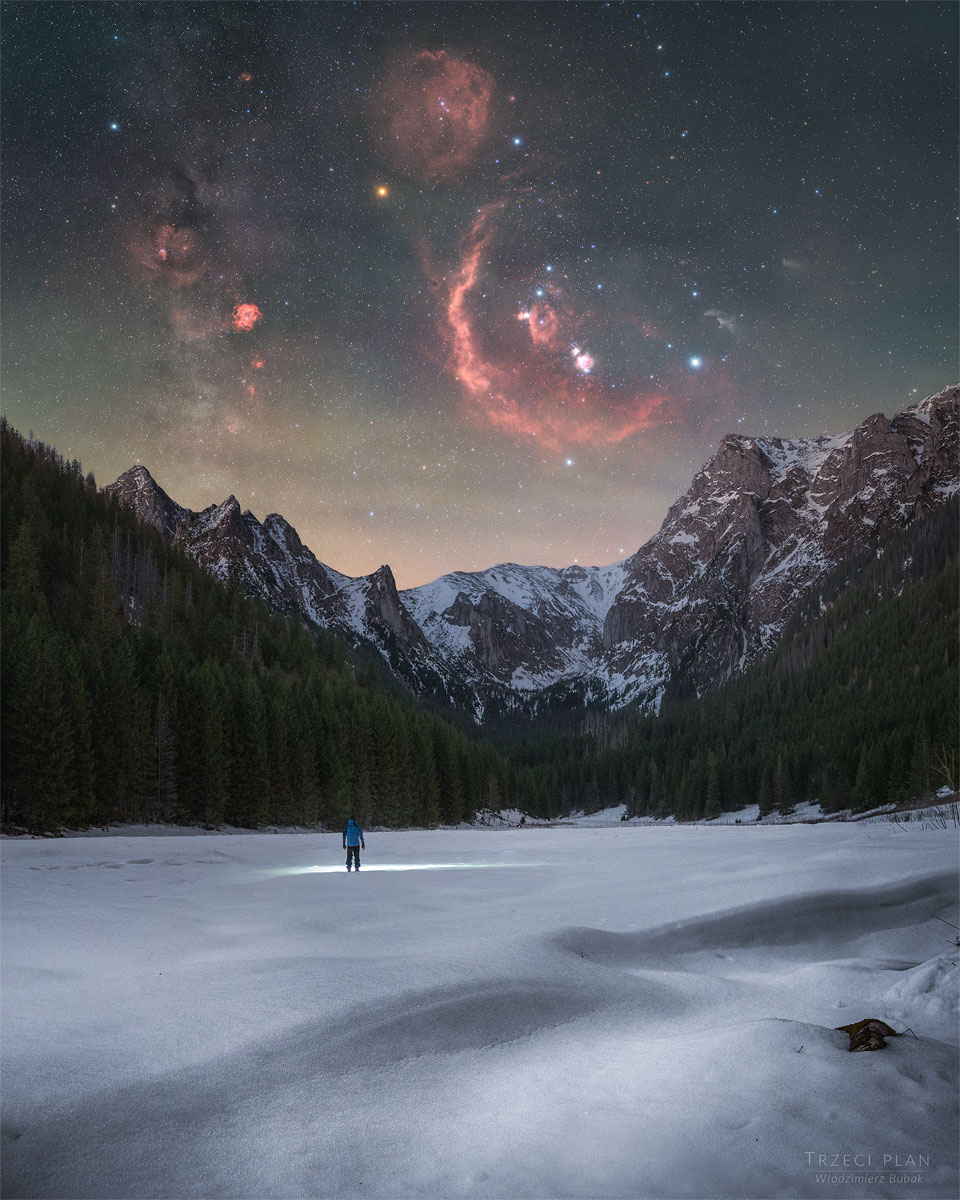
Orion's Belt Shines Bright Above Snowy Peaks: A Winter Wonderland of Stars

Disclosure: This post contains affiliate links. As an Amazon Associate, I earn from qualifying purchases.

The Full Story

High above the frozen valleys of Poland's Tatra Mountains, the familiar and beloved constellation of Orion takes center stage in a recently captured wide-field nightscape. This isn't just any photograph; it's a deep exposure taken from one of southern Poland's highest mountain ranges, where the combination of untouched alpine terrain and wonderfully dark skies creates a perfect canvas for celestial photography. The result is a stunning blend of Earth's rugged beauty and the ethereal glow of distant stars and gas clouds. Orion, often called 'The Hunter,' is one of the most recognizable constellations in the night sky, easily identified by its distinctive 'belt' of three bright stars. But this photo reveals so much more than just points of light. It beautifully showcases the Orion Nebula, a stellar nursery where new stars are being born, appearing as a fuzzy glow near Orion's 'sword.' You can also spot the vibrant orange hue of Betelgeuse, one of Orion's shoulders, and the brilliant blue-white of Rigel, his knee – both colossal stars with fascinating stories of their own. The magic behind such a captivating image lies not just in the photographer's skill, but also in the location. The Tatra Mountains offer exceptionally dark skies, meaning minimal light pollution from cities or towns. This lack of artificial light is crucial because it allows faint celestial objects, like nebulas, to become visible. High altitudes also help, as there's less atmosphere for the starlight to travel through, resulting in clearer, sharper views of the cosmos. What makes this particular APOD (Astronomy Picture of the Day) so special is its 'wide-field' nature. Instead of just zooming in on Orion, the photographer captured a vast panorama that includes the snowy peaks and valleys of Earth's landscape alongside the starry expanse. This technique helps to ground the cosmic view, making it feel more immediate and connected to our own planet, showing us how the wonders of space literally loom over our world. These images serve as a powerful reminder of the universe's incredible beauty and accessibility. They encourage us to step outside, away from city lights, and look up. They are a testament to the fact that while telescopes reveal wonders beyond our grasp, the naked eye and a good camera under dark skies can still offer breathtaking views that inspire awe and a deeper connection to our place in the vast cosmos.

Key Takeaways

  • 1 A stunning wide-field photo captures Orion over Poland's snowy Tatra Mountains.
  • 2 The image reveals familiar stars and the Orion Nebula, a star-forming region.
  • 3 Dark skies and high altitude are crucial for capturing such detailed celestial images.
  • 4 It beautifully connects Earth's landscapes with the wonders of the night sky.
  • 5 The photo inspires appreciation for both natural beauty and astronomical phenomena.
National Geographic Planisphere Star Finder

National Geographic Planisphere Star Finder

Essential tool for identifying constellations and stars. Perfect for beginners learning the night sky.

Check Price on Amazon
*As an Amazon Associate, we earn from qualifying purchases.

💡 Think of it this way:

Imagine seeing a magnificent diamond necklace glittering over a pristine, snowy landscape – that's what this picture feels like, but on a cosmic scale, showcasing the universe's own dazzling jewels.

How We Know This

This breathtaking image was captured using a specialized camera with a wide-angle lens, likely combined with long exposure times to gather as much light as possible from faint celestial objects. The key 'technology' was the remote location in the Tatra Mountains, which provides extremely dark skies, free from light pollution, allowing the camera to record the subtle glows of nebulas and the true colors of stars that would otherwise be obscured.

What This Means

This picture highlights the importance of preserving dark sky areas, places free from artificial light pollution, so that future generations can continue to enjoy and photograph the wonders of the night sky. It also inspires more people to engage in stargazing and astrophotography, fostering a greater public appreciation for astronomy and our natural world.

Why It Matters

This image reminds us of the profound connection between our planet's natural beauty and the vast cosmos above, encouraging us to look up and appreciate the wonders visible from our own backyard, even with just our eyes.

Related Topics

#Astrophotography #Orion #Night Sky #Tatra Mountains #Dark Skies