Orion's Mysterious Cosmic Shadow: Unveiling the Dark Nebula LDN 1622
In Brief
A breathtaking new image has captured LDN 1622, a fascinating 'dark nebula' in the constellation Orion, appearing as a shadowy silhouette against a faint glow of hydrogen gas. Unlike bright, shining nebulae, dark nebulae are dense cosmic clouds of dust and gas that block background starlight, revealing their presence as cosmic voids. These seemingly empty patches of space are actually crucial nurseries for future stars.
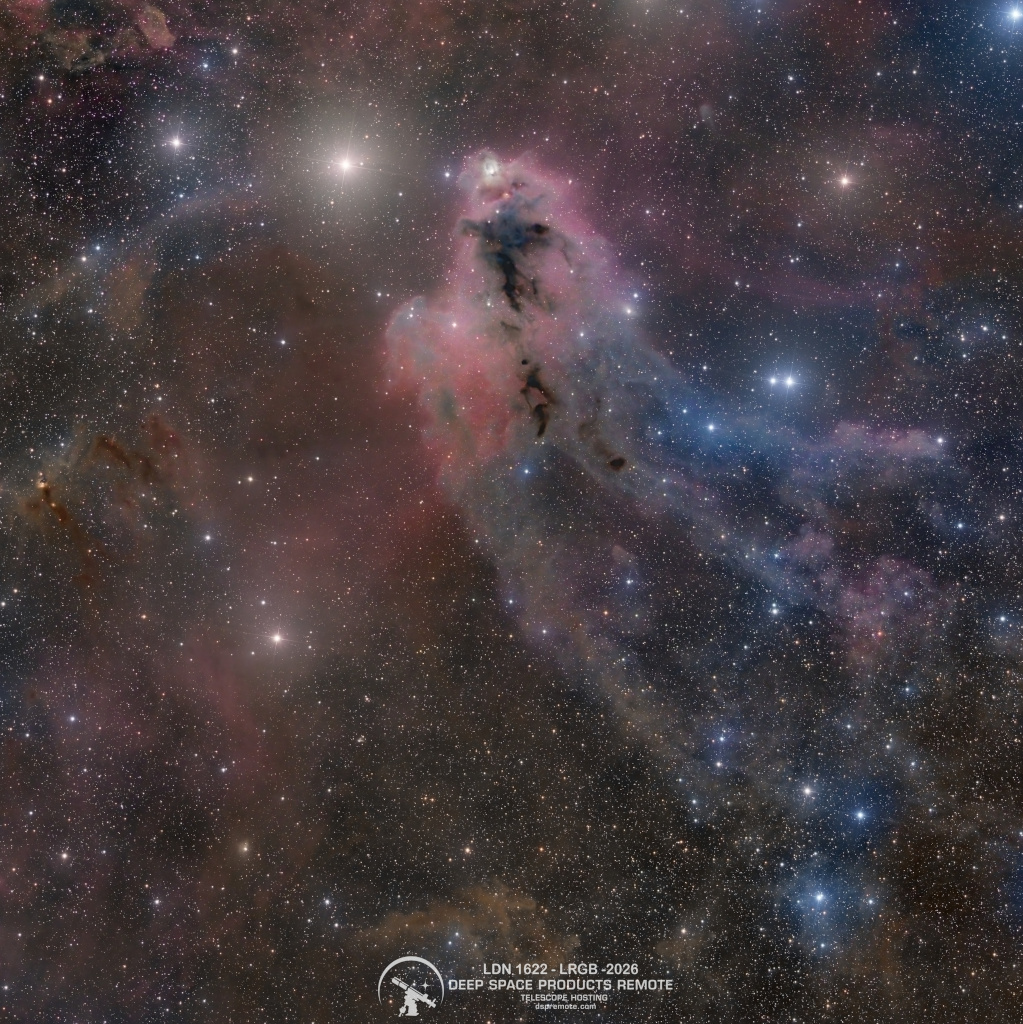
The Full Story
Key Takeaways
- 1 LDN 1622 is a 'dark nebula' in Orion, seen as a silhouette against glowing hydrogen gas.
- 2 Dark nebulae are dense clouds of dust and gas, not empty space, and are crucial star-forming regions.
- 3 Astronomers observe them using long telescopic exposures to capture faint background light.
- 4 Studying these nebulae helps us understand how stars are born and how galaxies evolve.
💡 Think of it this way:
Imagine looking at a dark cloud on a sunny day. The cloud itself isn't glowing, but you can see its shape clearly because it blocks the sunlight coming from behind it. That's similar to how we see a dark nebula – it's a cosmic cloud creating a shadow against a faint stellar glow.
How We Know This
The discovery was made using long-exposure astrophotography with powerful telescopes. By collecting light over many hours, even faint background hydrogen gas emissions become visible. The dark nebula then appears as a clear silhouette against this glow. This technique essentially lets astronomers 'develop' a very dim cosmic picture by gathering enough light over time.
What This Means
Understanding dark nebulae like LDN 1622 is vital for unraveling the mysteries of star formation and the cycle of matter in the universe. Future observations, especially with infrared telescopes, will allow us to see through the dust and directly observe nascent stars (protostars) forming within these clouds. This will provide unprecedented insights into the conditions and processes that lead to the birth of new stars and planetary systems, offering a glimpse into our own cosmic origins.
Why It Matters
This discovery helps us understand where new stars are born, shedding light on the very building blocks of our universe and how our own solar system might have formed. It reminds us that even the darkest parts of space are full of cosmic wonders and hold clues to our origins.