Io: Jupiter's Volcanic Moon, Revealed in True Color
In Brief
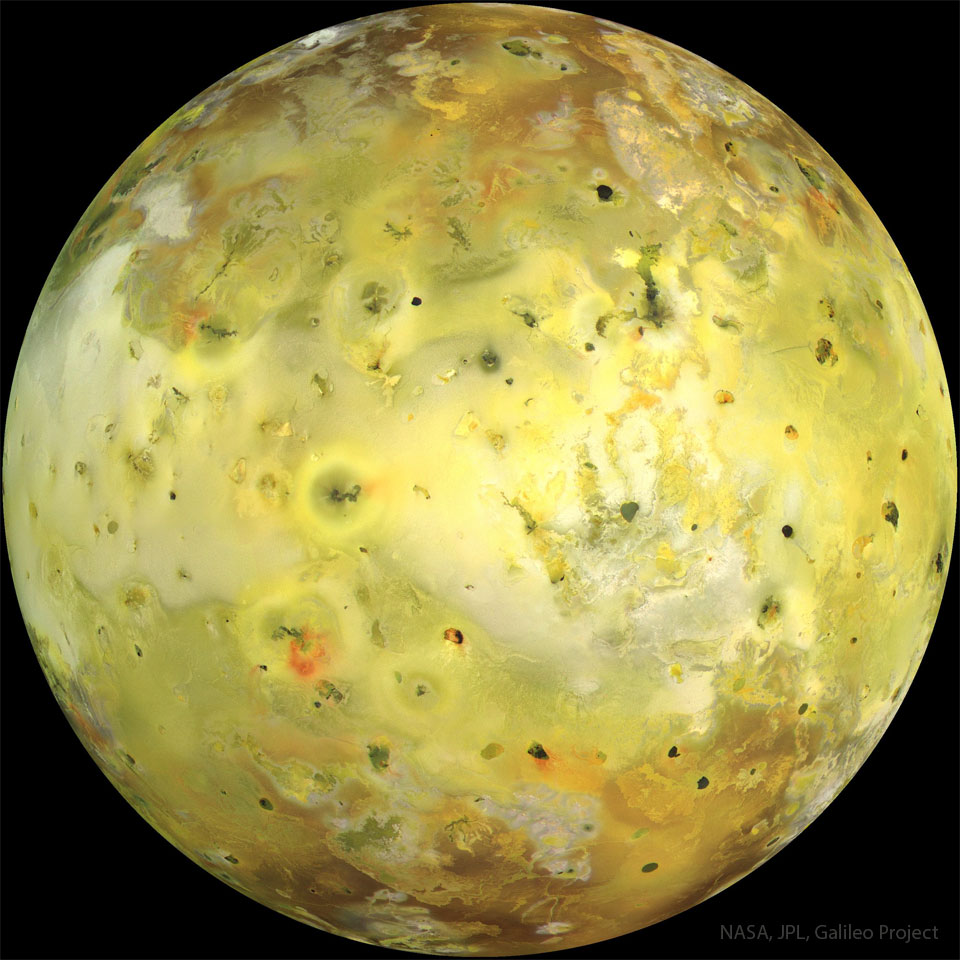
NASA's Galileo spacecraft captured a stunning "true color" image of Jupiter's moon Io, revealing its strikingly bright yellow appearance. This vibrant hue isn't from typical rocks but from various forms of sulfur, making Io one of the most volcanically active and colorful worlds in our solar system.
The Full Story
Key Takeaways
- 1 Io is Jupiter's most volcanically active moon, characterized by vibrant yellow, orange, and red colors.
- 2 Its distinct colors are due to various forms of sulfur coating its surface, ejected by constant volcanic eruptions.
- 3 The Galileo spacecraft captured 'true color' images of Io, showing how it would appear to the human eye.
- 4 Io's extreme volcanism is caused by intense tidal forces from Jupiter and other large moons.
💡 Think of it this way:
Imagine a massive, constantly erupting volcano on Earth, but instead of dark ash, it's spewing out colorful sulfur compounds that paint the entire landscape yellow, orange, and red, creating a constantly changing, vibrant spectacle.
How We Know This
NASA's Galileo spacecraft, which orbited Jupiter from 1995 to 2003, used its onboard cameras equipped with multiple color filters. By capturing images of Io through these different filters (like red, green, and blue), scientists were able to digitally combine and process them. This process creates a composite image that accurately represents the colors the average human eye would perceive, giving us a 'true color' view of Io.
What This Means
Studying Io provides a unique opportunity to understand planetary geology in extreme environments, especially processes like tidal heating and super-volcanism, which are rarely seen on Earth. This knowledge helps us build better models for how planets and moons form and evolve across the cosmos, and informs our search for diverse geological activity, even on distant exoplanets. Continued study can refine our understanding of planetary interiors and the conditions necessary for life in extreme chemical environments.
Why It Matters
Understanding Io helps us explore the incredible diversity of worlds beyond Earth and how powerful geological processes can shape a planet, even without liquid water, offering new perspectives on planetary evolution and extreme environments.