The Cosmic Brain: Unraveling the Medulla Nebula's Explosive Past
In Brief
Deep in space, a spectacular cloud called the Medulla Nebula is the ghost of a massive star that exploded about 10,000 years ago. This celestial brain-like structure formed when the star ran out of fuel, collapsed under its own gravity, and then detonated in a brilliant supernova.
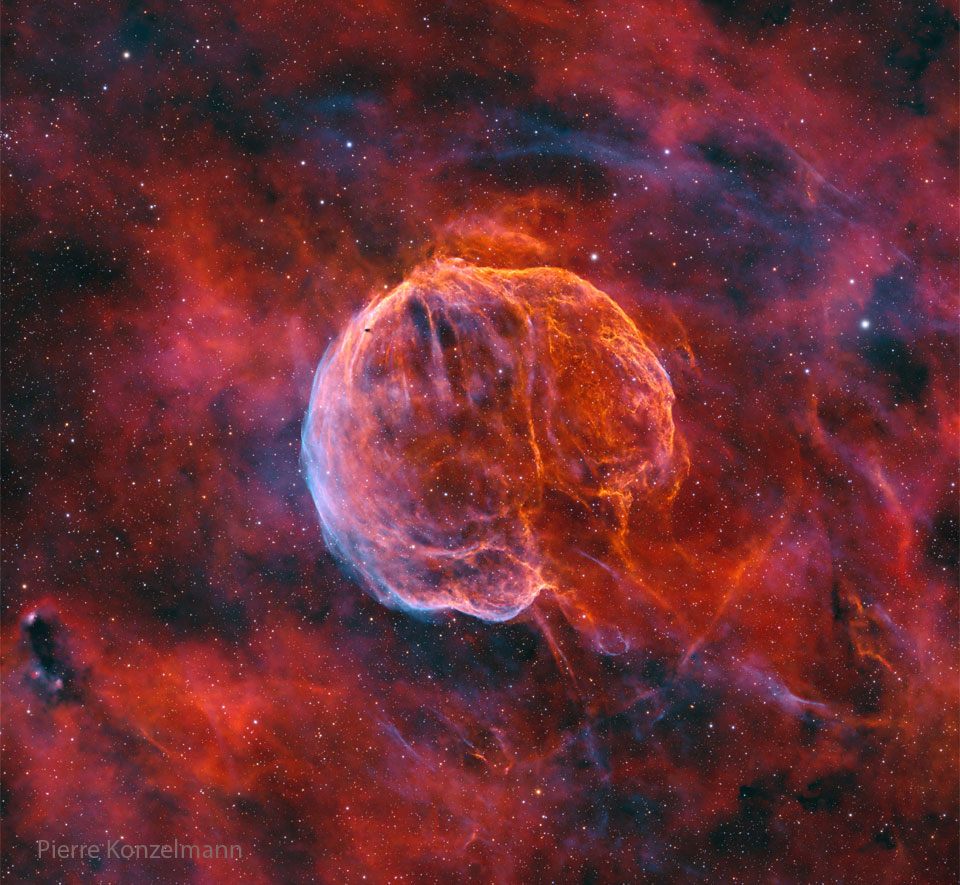
The Full Story
Key Takeaways
- 1 The Medulla Nebula (CTB 1) is the remnant of a massive star that exploded 10,000 years ago.
- 2 The explosion, a supernova, occurred when the star ran out of nuclear fuel.
- 3 Supernovas are crucial for creating and distributing heavy elements across the universe.
- 4 Studying these nebulae helps us understand star life cycles and galaxy evolution.
💡 Think of it this way:
Imagine a giant campfire that burns for millions of years. Eventually, it runs out of wood, collapses, and then explodes in a shower of sparks, leaving behind a glowing, expanding cloud of ash and smoke. That's a bit like what happened with the star that created the Medulla Nebula.
How We Know This
Astronomers use powerful telescopes, both on Earth and in space, to capture light emitted by the Medulla Nebula. By analyzing the colors and intensity of this light, they can determine the nebula's composition, temperature, and how fast it's expanding. Different wavelengths of light (like X-rays or radio waves) reveal different aspects of the explosion's leftover energy and matter.
What This Means
Understanding supernova remnants like the Medulla Nebula is vital for comprehending the 'cosmic recipe' – how the elements we are made of were forged and distributed throughout the universe. Future studies could reveal more about the specific type of star that exploded, any compact objects (like neutron stars or black holes) left behind, and how these explosions influence the formation of new stars and planetary systems in their vicinity.
Why It Matters
Understanding nebulae like CTB 1 helps us piece together the life cycles of stars, which are the cosmic factories for all the elements that make up our planet, and even us!