First Full Moon of 2026 Coincides with Earth's Closest Point to the Sun!
In Brief
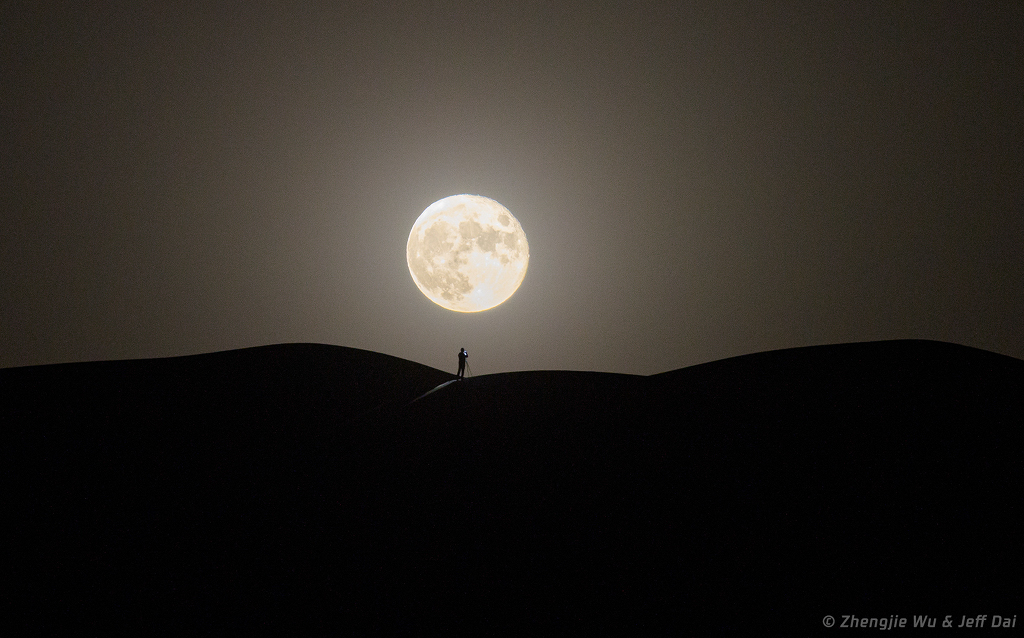
Start 2026 with a celestial treat! The first Full Moon of the year lights up the sky on January 3rd, and just hours later, our home planet reaches its perihelion – the closest point it gets to the Sun all year. This rare cosmic timing offers a spectacular view and a reminder of Earth's journey.
The Full Story
Key Takeaways
- 1 The first Full Moon of 2026 occurs on January 3rd, offering its brightest lunar phase.
- 2 Hours later, Earth reaches 'perihelion,' its closest point to the Sun in its elliptical orbit.
- 3 This near-simultaneous timing is a rare and exciting celestial coincidence.
- 4 It's a great opportunity to observe and understand Earth's dynamic journey through space.
💡 Think of it this way:
Imagine Earth running laps on an oval track around the Sun. Sometimes it's a bit closer to the center, and that's perihelion. Now picture the Moon's face, usually only partly lit, suddenly turning to face you head-on – that's the Full Moon. Tonight, these two cosmic events happen almost simultaneously!
How We Know This
Astronomers use advanced mathematical models based on Isaac Newton's laws of motion and gravity to precisely calculate the orbits of celestial bodies like the Earth and Moon. By tracking their positions over time, they can predict exactly when events like a Full Moon or Earth's perihelion will occur, often years in advance. These predictions are then confirmed by observation, either with the naked eye for bright events like the Full Moon, or with telescopes and scientific instruments for more detailed study.
What This Means
While this particular event doesn't herald new scientific breakthroughs, it serves as an incredible educational moment for the public. It encourages people to look up, fostering curiosity about astronomy and the science behind our solar system's movements. Such occurrences help us appreciate the intricate ballet of celestial bodies and can inspire the next generation of scientists and space explorers to delve deeper into the mysteries of the universe.
Why It Matters
This unique alignment gives us a fantastic opportunity to enjoy the brightest lunar phase of the year and provides a tangible way to understand Earth's elliptical orbit and our place in the solar system. It's a perfect moment to step outside and connect with the cosmos.