Back to Articles Image Of The Day

Solar Max Unleashes Dazzling Auroras: Your Guide to the Night Sky Show!

📖 3 min read 📊 beginner 🏷️ NASA APOD

In Brief

Get ready for a spectacular celestial light show! Thanks to the Sun reaching its 'solar maximum' in 2025, Earth is experiencing some of the most vibrant aurora displays in years. This peak in solar activity means more chances to witness the mesmerizing Northern and Southern Lights through 2026.
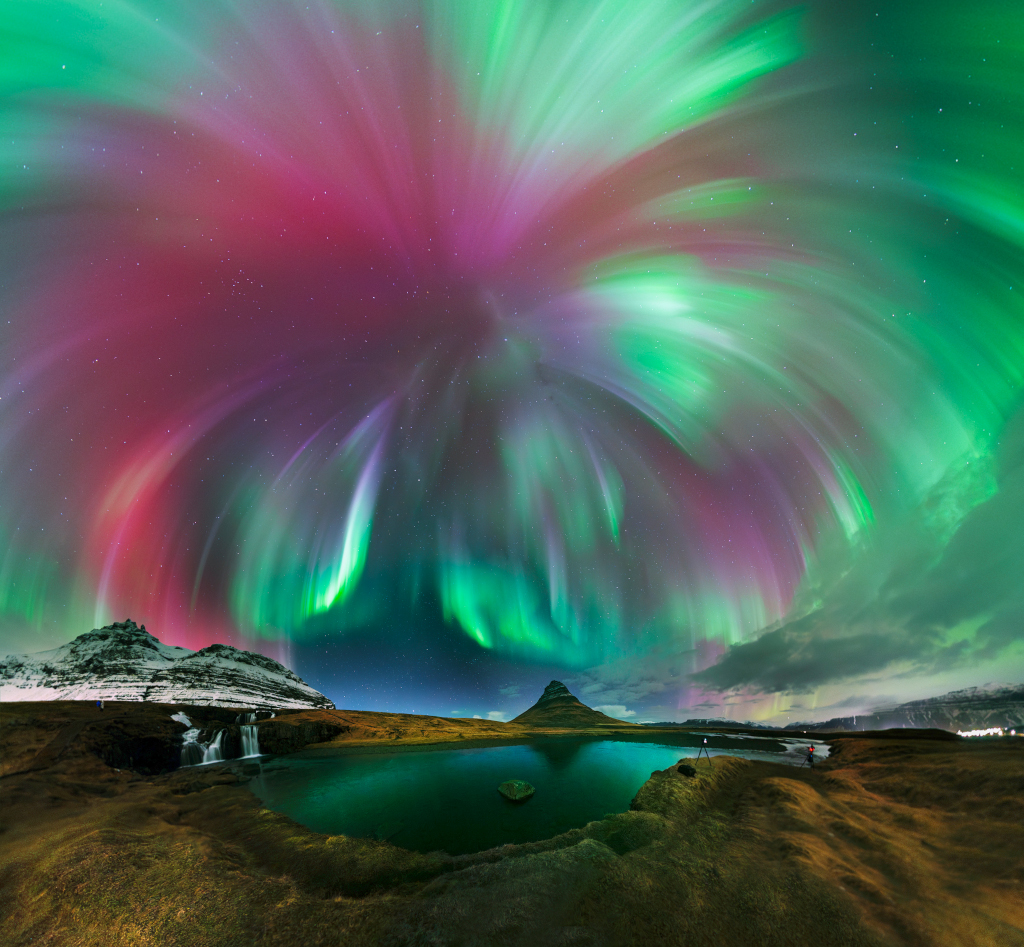
Solar Max Unleashes Dazzling Auroras: Your Guide to the Night Sky Show!

Disclosure: This post contains affiliate links. As an Amazon Associate, I earn from qualifying purchases.

The Full Story

Imagine the night sky erupting in a dazzling crown of light, swirling greens, reds, and purples directly overhead. This breathtaking phenomenon, sometimes called an 'auroral corona,' is a highlight of the current solar maximum, making 2025 and 2026 exceptional years for aurora chasers. The increased solar activity means more frequent and intense displays, turning our polar skies into a canvas of otherworldly beauty. So, what causes these celestial dances? It all starts with our Sun, constantly sending out a stream of charged particles called the solar wind. When these particles hit Earth's magnetic field, most are deflected, but some get channeled towards our planet's poles. As they collide with gases in our atmosphere – primarily oxygen and nitrogen – they excite these atoms, making them glow. Different gases and altitudes create the familiar vibrant greens, reds, and occasional blues or purples, much like a sophisticated neon sign. The key to the current aurora boom is 'Solar Cycle 25' reaching its 'solar maximum.' The Sun goes through roughly 11-year cycles of activity, from quiet to very active. During a solar maximum, like now, the Sun is abuzz with activity: more sunspots, solar flares, and colossal eruptions of plasma called Coronal Mass Ejections (CMEs). These events send a stronger, denser stream of particles our way, supercharging Earth's magnetic field and fueling brighter and more frequent auroras that can sometimes be seen even from lower latitudes. An 'auroral corona' isn't a different type of aurora, but rather a particularly intense and overhead display. When you're directly under a strong aurora, the light appears to radiate outwards from a central point, like spokes on a wheel or the 'corona' around a star during an eclipse. It's a sign of a truly powerful celestial event unfolding high above, indicating that the solar particles are streaming down directly over your location, creating a truly immersive and awe-inspiring experience. While strong solar activity can push auroras further south (or north, for aurora australis) than usual, the best views are still typically from high-latitude regions, like Canada, Alaska, Scandinavia, and parts of Russia. To catch this magnificent show, seek out dark skies away from city lights, be patient, and remember to look up during clear, dark nights. This period offers an unparalleled opportunity to witness one of Earth's most stunning natural light shows.

Key Takeaways

  • 1 The Sun's 'solar maximum' in 2025-2026 means more frequent and vibrant auroras.
  • 2 Auroras are caused by charged particles from the Sun interacting with Earth's atmosphere.
  • 3 An 'auroral corona' is a spectacular, overhead display of the Northern or Southern Lights.
  • 4 This period offers an incredible chance to witness one of nature's most stunning light shows.
National Geographic Planisphere Star Finder

National Geographic Planisphere Star Finder

Essential tool for identifying constellations and stars. Perfect for beginners learning the night sky.

Check Price on Amazon
*As an Amazon Associate, we earn from qualifying purchases.

💡 Think of it this way:

Think of our Sun as a giant, cosmic popcorn machine, and sometimes it gets extra 'poppy' with bursts of energy. When these bursts reach Earth, they light up our atmosphere like a giant, colorful neon sign!

How We Know This

These breathtaking auroral displays are primarily observed and captured by skygazers, photographers, and scientific cameras on the ground, often using long-exposure photography to reveal their full, swirling beauty. Satellites like NASA's ACE and DSCOVR also play a crucial role, monitoring the solar wind to provide early warnings of potential aurora activity, giving aurora hunters a heads-up!

What This Means

For us on Earth, this period means more opportunities to witness nature's most incredible light show. For scientists, it's a valuable time to study how solar activity impacts our planet's magnetosphere and atmosphere. While generally harmless and beautiful, very strong solar storms during a maximum can sometimes affect satellites, communication systems, and even power grids, making understanding them crucial for future technological resilience.

Why It Matters

This is your prime opportunity to witness one of nature's most breathtaking spectacles, connecting us directly to the powerful activity of our own star, the Sun. It's a reminder of the dynamic universe we live in and a chance to look up in wonder.

Related Topics

#Aurora Borealis #Solar Maximum #Space Weather #Northern Lights #Earth's Atmosphere