Back to Articles Image Of The Day

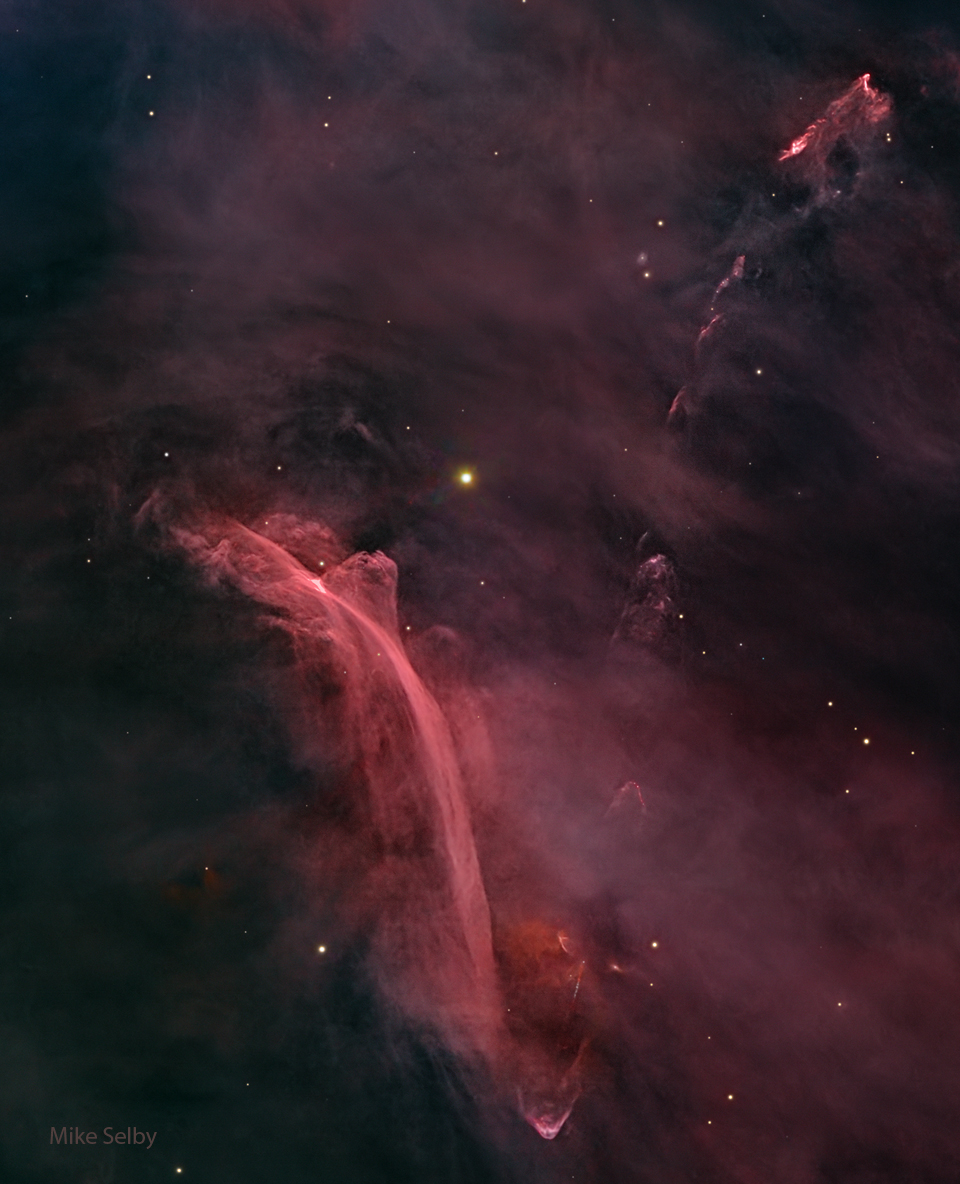
The Cosmic Waterfall: A Ten Light-Year Mystery Flowing Through Space

📖 3 min read 📊 beginner 🏷️ NASA APOD

In Brief

Astronomers are captivated by a stunning cosmic structure dubbed the 'Waterfall Nebula,' officially known as Herbig-Haro 222. This enormous stream of glowing gas, stretching ten light-years long, looks like a celestial waterfall flowing through the Orion constellation, but its true origin remains a puzzle for scientists.
The Cosmic Waterfall: A Ten Light-Year Mystery Flowing Through Space

Disclosure: This post contains affiliate links. As an Amazon Associate, I earn from qualifying purchases.

The Full Story

Deep within the familiar constellation of Orion lies a cosmic spectacle known as Herbig-Haro 222, affectionately nicknamed the 'Waterfall Nebula.' This breathtaking structure is a colossal stream of gas, glowing faintly in the vast darkness of space, and it truly lives up to its name, appearing like a grand cascade frozen in time. What makes it even more astonishing is its sheer scale: this gaseous 'river' stretches an incredible ten light-years across – that's roughly 60 trillion miles! Despite its magnificent appearance, the precise origin of this cosmic wonder remains one of astronomy's intriguing unsolved mysteries. Herbig-Haro objects, like our Waterfall Nebula, are typically born from the dramatic process of star formation. When massive, energetic young stars are just beginning their lives, they often blast out powerful jets of gas at incredible speeds. These jets then collide with the slower-moving gas and dust surrounding them, creating shockwaves that heat the material and make it glow – much like a super-fast bullet hitting a target creates a flash of light and heat. These glowing regions are what we observe as Herbig-Haro objects, often acting as cosmic signposts for where new stars are emerging. The Waterfall Nebula makes its home within the Great Orion Molecular Cloud complex, a bustling stellar nursery renowned for its active star-forming regions, including the famous Orion Nebula. It's located near a bright reflection nebula called NGC 1999, which itself is lit up by a young star. This location strongly suggests that HH 222 is indeed connected to the birth of stars. However, unlike many Herbig-Haro objects where a clear 'source' star can be pinpointed at the base of the jet, the sheer length and diffuse nature of the Waterfall Nebula make it difficult to identify the precise stellar engine driving this magnificent outflow. Astronomers are working to understand if this gigantic streamer is the result of a single, exceptionally powerful outburst from a hidden young star, or perhaps a more complex interaction involving multiple stars or even the remnants of an older, grander event. The clues are subtle and require careful analysis. Is it an ancient river of gas that has faded over time, or a series of smaller, overlapping flows? Pinpointing its true origin would unlock crucial information about the most extreme forms of stellar activity during a star's tumultuous infancy. The quest to understand the Waterfall Nebula continues, pushing the boundaries of our knowledge about how stars are born and how they dramatically shape their cosmic neighborhoods. Each new observation and every new theory brings us closer to unraveling the secrets held within this stunning celestial cascade, helping us paint a more complete picture of the dynamic and sometimes violent processes that lead to the formation of stars and planets, including our own.
National Geographic Planisphere Star Finder

National Geographic Planisphere Star Finder

Essential tool for identifying constellations and stars. Perfect for beginners learning the night sky.

Check Price on Amazon
*As an Amazon Associate, we earn from qualifying purchases.

💡 Think of it this way:

Imagine a giant cosmic river, not of water, but of glowing gas, stretching across billions of miles, with scientists trying to find where its mysterious source is hidden.

How We Know This

Astronomers use powerful telescopes, both on Earth and in space, to capture images of these faint, glowing gases. By meticulously analyzing the light emitted from the nebula – a technique called spectroscopy – they can determine its composition, temperature, and even how fast different parts of the gas are moving. They then piece together these subtle clues, much like cosmic detectives, to understand the forces and events that led to its formation.

What This Means

Unraveling the mystery of the Waterfall Nebula could provide vital insights into the most powerful and enigmatic processes of star formation, how young stars interact with their complex environments, and the grand cosmic sculpting that shapes nebulae across the galaxy. This knowledge contributes to our understanding of the universe's evolution and the conditions under which planetary systems, like our own, might arise.

Why It Matters

Studying such unique objects helps us understand how stars are born, how matter moves and shapes our universe, and the powerful forces at play in cosmic nurseries, offering clues to our own cosmic origins.

Related Topics

#Nebula #Star Formation #Orion #Herbig-Haro #Astrophysics