Back to Articles Image Of The Day

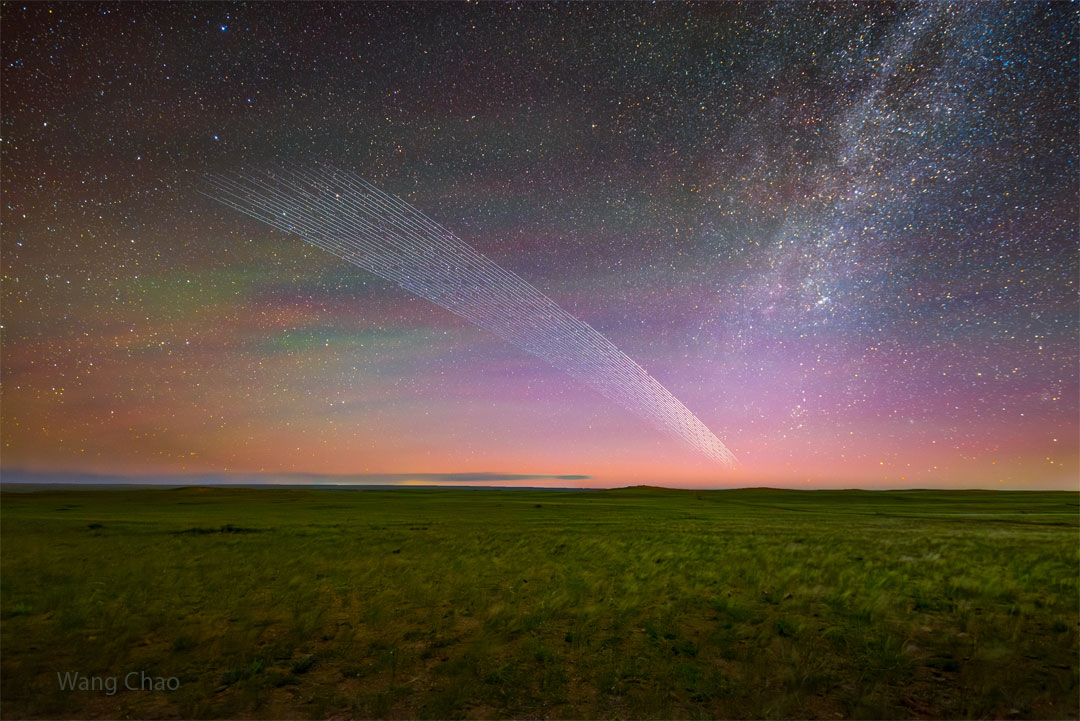
The 'Comet' That Isn't: Starlink's Dazzling Satellite Parade

📖 4 min read 📊 beginner 🏷️ NASA APOD

In Brief

That stunning 'comet' streaking across the night sky isn't a cosmic visitor, but rather a spectacular time-lapse image of Starlink satellites reflecting sunlight. Captured in low Earth orbit, these interconnected spacecraft create a mesmerizing light show as they orbit our planet, showcasing both technological marvel and a new challenge for stargazers.
The 'Comet' That Isn't: Starlink's Dazzling Satellite Parade

Disclosure: This post contains affiliate links. As an Amazon Associate, I earn from qualifying purchases.

The Full Story

If you saw a picture of a brilliant 'comet' with an incredibly long, bright tail streaking across the night sky, you might be excused for thinking we had a new celestial visitor! But what you're actually witnessing is a clever photographic trick revealing a very earthly, yet equally impressive, sight: a 'train' of Starlink satellites. Starlink is a massive constellation of satellites launched by SpaceX, designed to provide high-speed internet access to nearly every corner of the globe. Unlike traditional satellites that orbit much higher, Starlink operates in Low Earth Orbit (LEO) – a region relatively close to our planet. This proximity allows them to deliver internet with lower latency, meaning faster response times, which is crucial for applications like video calls and online gaming. The 'tail' effect you see in the image isn't a natural comet phenomenon at all. It's created by the satellites themselves, reflecting sunlight. Even after the sun has set on the ground, these high-flying spacecraft can still catch the sun's rays, making them appear as bright points of light against the darkening sky. The photograph is a time-lapse sequence, meaning many individual pictures taken over a period were stacked on top of each other. As the satellites moved across the sky during the exposure time, their continuous movement formed the elongated, comet-like streaks. While undoubtedly a technological marvel bringing internet to remote areas, the growing number of satellite constellations like Starlink presents new challenges. Their brightness can sometimes interfere with astronomical observations, creating streaks across telescope images and making it harder for scientists to study faint galaxies, distant planets, or even track potentially hazardous asteroids. This phenomenon has sparked important conversations within the astronomical community about how to balance technological advancement with the preservation of our view of the cosmos. Astronomers and satellite operators are already exploring solutions, such as coating satellites with darker, less reflective materials or designing them to orient themselves in ways that minimize sunlight reflection. This innovative 'artificial comet' serves as a vivid reminder that as humanity expands its presence in space, thoughtful planning and collaboration are essential to ensure both global connectivity and our continued ability to explore the universe from Earth.

Key Takeaways

  • 1 The 'comet tail' is actually a time-lapse photo of Starlink satellites.
  • 2 Starlink satellites operate in Low Earth Orbit (LEO) to provide global internet.
  • 3 The 'tail' is caused by sunlight reflecting off the satellites, captured over time.
  • 4 This phenomenon highlights benefits (internet access) and challenges (light pollution for astronomy).
  • 5 Solutions are being explored to mitigate the impact on stargazing and space research.
National Geographic Planisphere Star Finder

National Geographic Planisphere Star Finder

Essential tool for identifying constellations and stars. Perfect for beginners learning the night sky.

Check Price on Amazon
*As an Amazon Associate, we earn from qualifying purchases.

💡 Think of it this way:

Imagine a fleet of tiny, sparkling mirrors parading across the sky, catching the sun's light long after sunset, much like a distant string of holiday lights moving in formation.

How We Know This

This incredible image was captured using a technique called time-lapse photography. An astronomer took multiple pictures of the same area of the sky over a period of time, then cleverly combined or 'stacked' them together. As the Starlink satellites moved across the frame, each reflecting sunlight brightly, their individual paths merged into one continuous, 'comet-like' streak, making their orbital journey visible.

What This Means

The proliferation of satellite constellations like Starlink heralds a new era of global connectivity, promising to bring internet access to previously underserved regions worldwide. However, it also presents significant challenges for ground-based astronomy due to increased light pollution and the potential for orbital congestion and space debris. Scientists and space companies are actively collaborating on solutions, such as developing less reflective satellite designs and implementing improved space traffic management, to ensure a sustainable future for both human activities on Earth and our ability to explore the cosmos.

Why It Matters

This phenomenon highlights the increasing presence of satellites in Earth's orbit, sparking discussions about light pollution for astronomers while also showcasing the technology bringing global internet access to more people than ever before.

Related Topics

#Starlink #Satellites #Low Earth Orbit #Light Pollution #Time-lapse Photography