Hubble's 'Jewel Box': A Sparkling City of Stars in a Neighboring Galaxy
In Brief
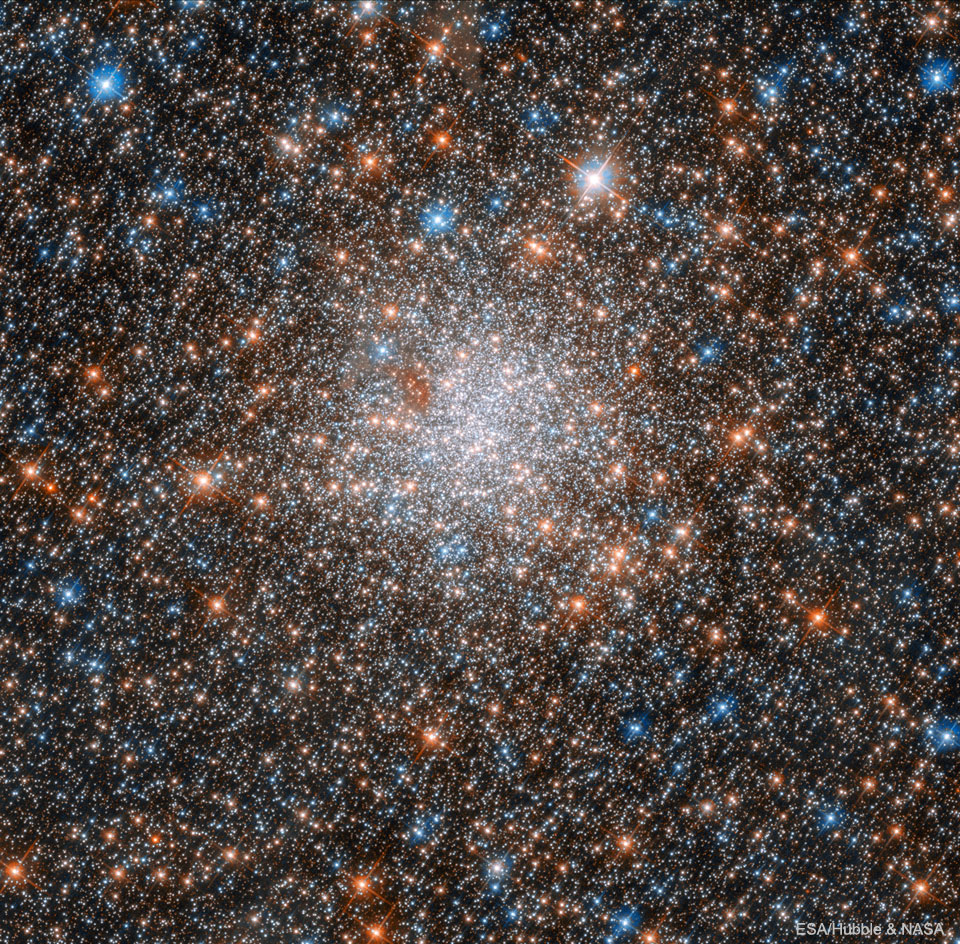
NASA's Hubble Space Telescope has captured a stunning image of NGC 1898, a dense ball of millions of stars known as a globular cluster. Located in the Large Magellanic Cloud, one of our closest galactic neighbors, this celestial 'jewel box' offers an incredible glimpse into ancient stellar populations.
The Full Story
Key Takeaways
- 1 Hubble captured a stunning 'jewel box' image of NGC 1898, a dense globular cluster.
- 2 Globular clusters are ancient star cities, crucial for understanding early star formation and galaxy evolution.
- 3 The cluster is located in the Large Magellanic Cloud, a neighboring galaxy, showcasing stars of various colors and ages.
💡 Think of it this way:
Imagine looking at a bustling city from a very high airplane at night. Each tiny light is a star, and this image is like seeing an entire city where every single building is made of stars, sparkling brightly from a distance.
How We Know This
The images were captured using the Hubble Space Telescope, a powerful observatory orbiting Earth far above the distorting effects of our planet's atmosphere. Hubble's sensitive cameras collected the faint light from individual stars within NGC 1898, which traveled across vast cosmic distances. By carefully analyzing the different wavelengths (colors) of this light, astronomers can learn about the stars' properties like temperature, age, and chemical composition.
What This Means
Continued study of clusters like NGC 1898 will help us refine our models of stellar evolution and how galaxies interact over cosmic timescales. Future telescopes, like the James Webb Space Telescope, can peer even deeper into the infrared spectrum, potentially revealing even cooler, fainter stars within these clusters, or even studying the chemical makeup of these ancient stellar populations in unprecedented detail. This ongoing research helps us fill in the gaps in the universe's grand story.
Why It Matters
This discovery helps us understand how stars are born, evolve, and live together in vast communities. By studying these ancient clusters, scientists piece together the history of galaxies, including our own Milky Way, and learn about the universe's earliest building blocks.