Back to Articles Image Of The Day

Apollo 17's Moon Lander: A Space Oddity Dancing Around the Moon

📖 3 min read 📊 beginner 🏷️ NASA APOD

In Brief

Take a fresh look at Apollo 17's 'Challenger' lunar module, a unique spacecraft that landed humans on the Moon. This stunning, reprocessed image captures its ascent stage orbiting our celestial neighbor after its crucial mission. It's a peek back at the daring design that made lunar exploration possible.
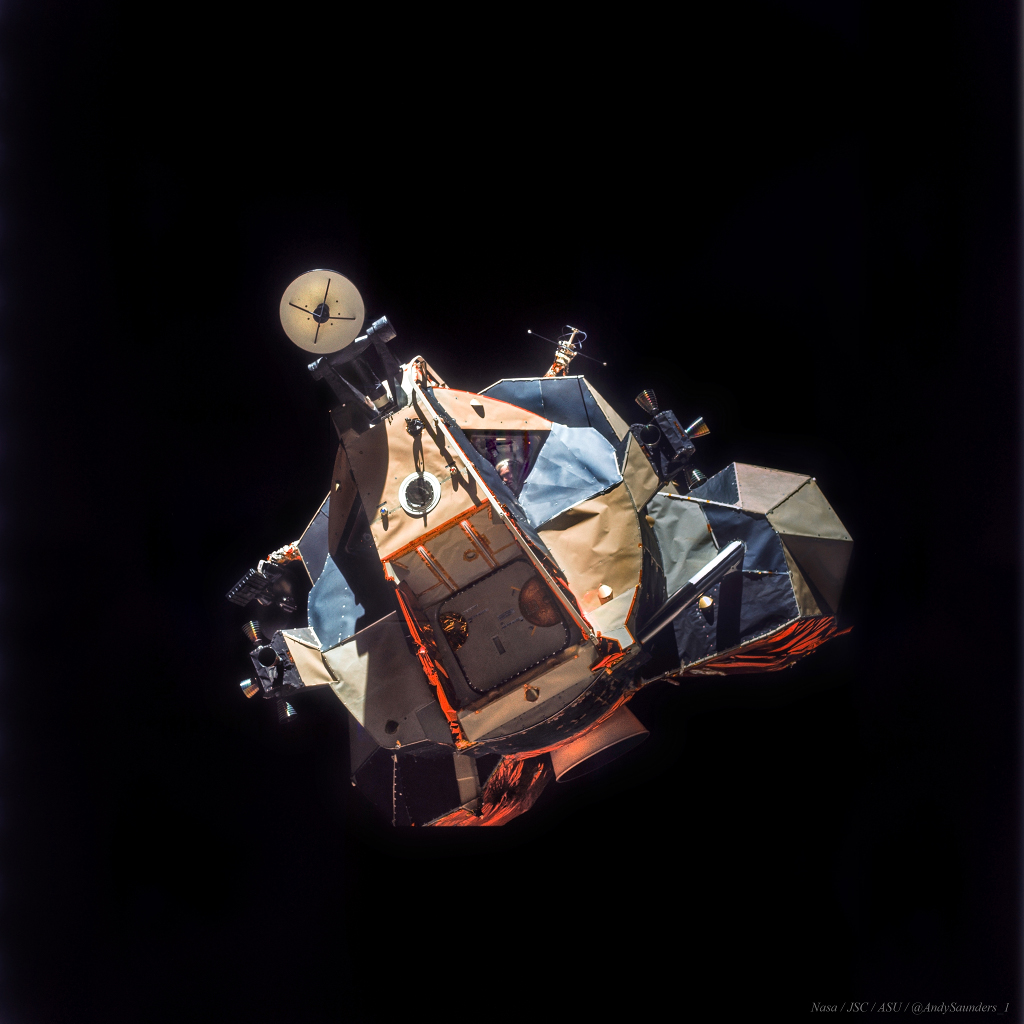
Apollo 17's Moon Lander: A Space Oddity Dancing Around the Moon

Disclosure: This post contains affiliate links. As an Amazon Associate, I earn from qualifying purchases.

The Full Story

When you picture a spacecraft, you might imagine sleek, aerodynamic lines. But take a look at Apollo 17's lunar module, nicknamed 'Challenger,' and you'll see something quite different. With its angular, almost spidery appearance, it looks more like a quirky contraption from a sci-fi movie than a vehicle designed for precision space travel. Yet, this unusual design was no accident; it was a testament to brilliant engineering specifically crafted for the ultimate vacuum of space and the airless environment of the Moon. This incredible, digitally enhanced photograph offers a fresh perspective on Challenger's ascent stage. Captured from Apollo 17's command module, 'America,' it shows the upper part of the lunar lander gracefully orbiting the Moon. This was after its bottom half, the 'descent stage,' had done its job – bringing astronauts Gene Cernan and Harrison Schmitt safely to the lunar surface and serving as their launchpad back into orbit. The image captures a moment of triumph and transition, a silent sentinel circling our natural satellite. The lunar module was actually two distinct parts: the descent stage, which acted as a landing gear and launchpad, and the ascent stage, the living quarters and 'return ticket.' Once the astronauts completed their moonwalks and research, they climbed back into the ascent stage. This part housed the crucial engine that fired to lift them off the lunar surface, rejoining their colleague Ron Evans in the orbiting command module. Seeing it alone in orbit highlights its singular purpose: bringing humans home. Notice the small reaction control thrusters hinted at in the original description. These aren't big rocket engines; think of them more like tiny, precise puffs of gas. In the vacuum of space, even a small burst of gas can change a spacecraft's orientation. These thrusters were vital for maneuvering the ascent stage, allowing it to dock precisely with the command module. Without an atmosphere to push against, traditional rudders or wings are useless, so these tiny jets were the key to navigating the celestial ballet of rendezvous and docking. Reprocessing old images like this isn't just about making them look prettier. It's about bringing out details that were previously hidden, allowing us to study these historic missions with new eyes. Each pixel holds a story of human ingenuity, risk, and exploration. This photo is a vivid reminder of the incredible achievement of Apollo 17, the last human mission to the Moon, and the highly specialized craft that made it possible for us to explore another world.

Key Takeaways

  • 1 The Apollo 17 lunar module, 'Challenger,' had an unconventional design perfectly suited for space.
  • 2 A reprocessed image shows its ascent stage orbiting the Moon after its crucial mission.
  • 3 The ascent stage was the critical 'return ticket' for astronauts after exploring the lunar surface.
NASA Mission Patches Collection Set

NASA Mission Patches Collection Set

Collection of iconic NASA mission patches. Great for space enthusiasts and collectors.

Check Price on Amazon
*As an Amazon Associate, we earn from qualifying purchases.

💡 Think of it this way:

Imagine a specialized off-road vehicle built only for mountain climbing, looking a bit strange on a regular road but perfectly designed for its extreme task. That's a bit like the lunar module – weird-looking but perfectly suited for the Moon's harsh environment.

How We Know This

This stunning image was originally captured by astronauts aboard Apollo 17's Command Module, 'America,' as it orbited the Moon. In recent times, experts have digitally enhanced and reprocessed this historical photo. This process involves using modern computer techniques to bring out hidden details, improve clarity, and restore colors, making the 50-year-old image look clearer and more vibrant than ever before, almost like seeing it for the first time.

What This Means

Looking at images like this helps us appreciate the foundational engineering that paved the way for future space endeavors. The principles of modular design and precision maneuvering used in the lunar module are still relevant for missions like NASA's upcoming Artemis program, which aims to return humans to the Moon. By studying these historical feats with new tools, we continue to learn valuable lessons for designing the next generation of spacecraft and inspiring future explorers to push the boundaries even further.

Why It Matters

This image reminds us of the ingenuity and bravery of the Apollo missions, showcasing the specialized engineering required to explore beyond Earth. It connects us to a pivotal moment in human history when we first stepped onto another world, inspiring future generations of space explorers.

Related Topics

#Apollo 17 #Lunar Module #Moon Exploration #Space History #NASA