Back to Articles Image Of The Day

Our Solar System's Unexpected Visitor: Interstellar Comet 3I/ATLAS

πŸ“– 3 min read πŸ“Š beginner 🏷️ NASA APOD

In Brief

Our solar system recently welcomed an extraordinary guest: comet 3I/ATLAS, a visitor from beyond our own star. This cosmic wanderer zipped past Earth at a considerable distance on December 19th, giving scientists a rare peek at material formed in a completely different star system.
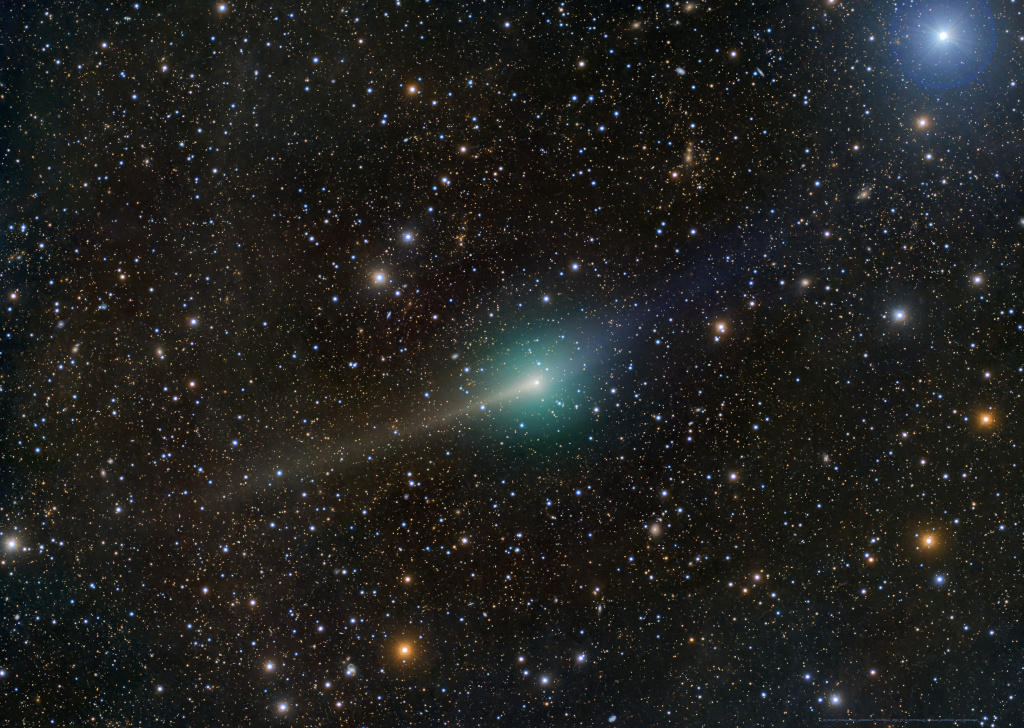
Our Solar System's Unexpected Visitor: Interstellar Comet 3I/ATLAS

Disclosure: This post contains affiliate links. As an Amazon Associate, I earn from qualifying purchases.

The Full Story

Our corner of the galaxy recently got a fascinating, albeit distant, visitor: the interstellar comet 3I/ATLAS. Unlike the comets we typically see, which originated from the icy fringes of our own solar system, 3I/ATLAS is a true cosmic immigrant. This icy wanderer journeyed from another star system entirely, making its closest (though still very far) approach to Earth on December 19th. It’s only the third such object ever confirmed, making every observation incredibly valuable. When 3I/ATLAS made its flyby, it wasn't exactly a close shave. It passed at a distance of 1.8 Astronomical Units (AU) from Earth. To put that in perspective, 1 AU is the average distance from the Earth to the Sun, so it was nearly twice that far! If we measure in travel time for light, that's about 900 light-seconds away – still a vast distance. Despite this significant separation, astronomers using powerful telescopes were able to capture faint images of the comet, allowing them to study this extraordinary object. Even from afar, seeing a visitor from another star is a huge deal. Comets are often described as "dirty snowballs" – icy chunks of rock and dust that orbit a star. As they get closer to the star, the ice vaporizes, creating a distinctive glowing 'coma' (a fuzzy atmosphere) and sometimes a tail. What sets 3I/ATLAS apart is its designation: "3I" means it's the third *interstellar* object we've identified. This means it wasn't formed here, in our Sun's nebula, but rather around another star and was somehow ejected from its home system, drifting through the vast emptiness of interstellar space for perhaps millions of years before encountering our Sun's gravitational pull. Why does this matter? Interstellar comets are essentially free samples from other planetary systems. By studying 3I/ATLAS, scientists can analyze its composition – the types of ice, dust, and gases it's made of – to gain insights into the conditions and building blocks present in its original stellar nursery. This information helps us understand if other star systems form planets using similar ingredients to our own, or if there's a wild diversity out there. It’s like having a small piece of another world land on your doorstep, offering clues about faraway cosmic recipes. Detecting such a faint, fast-moving object from so far away requires incredibly advanced technology. Astronomers used sophisticated ground-based telescopes equipped with highly sensitive cameras. These instruments employed "deep exposure" techniques, meaning they gathered light from the comet over long periods – sometimes hours – to build up enough signal to make it visible against the faint background of distant stars. This dedicated work allowed them to capture images of 3I/ATLAS as it swept silently across the cosmic canvas.

Key Takeaways

  • 1 An interstellar comet named 3I/ATLAS recently visited our solar system, passing by Earth at a distance of 1.8 Astronomical Units.
  • 2 As an "interstellar" object, 3I/ATLAS originated from another star system entirely, not our own Sun.
  • 3 Studying its composition provides unique clues about the building blocks and formation processes of planets around other stars.
National Geographic Planisphere Star Finder

National Geographic Planisphere Star Finder

Essential tool for identifying constellations and stars. Perfect for beginners learning the night sky.

Check Price on Amazon
*As an Amazon Associate, we earn from qualifying purchases.

πŸ’‘ Think of it this way:

Imagine receiving a message in a bottle that traveled across a vast ocean from a land you've never seen. That's similar to how astronomers view 3I/ATLAS – a direct messenger from another star system, carrying secrets about its distant home.

How We Know This

Astronomers used powerful ground-based telescopes and advanced imaging techniques, including long-exposure photography, to detect and track the very faint light from 3I/ATLAS. By patiently collecting light over extended periods, they were able to capture images and gather data about this distant, fast-moving cosmic visitor.

What This Means

The discovery and observation of interstellar objects like 3I/ATLAS are crucial for understanding how common they are and how star systems exchange material across the galaxy. Future studies of these rare visitors will help refine our theories on planetary formation beyond our solar system, potentially revealing if the ingredients for life are universally similar or vastly different across the cosmos. It also emphasizes the importance of ongoing sky surveys to detect these fleeting cosmic messengers.

Why It Matters

This discovery offers a unique chance to study pristine "alien" material without sending a spacecraft. It's like receiving a natural sample from another star's neighborhood, providing direct clues about how other planetary systems form and what they're made of.

Related Topics

#Interstellar Comet #3I/ATLAS #Astronomy #Solar System #Exoplanetary Science