Cosmic Wonders: A Stellar Nursery Blooms in the Unicorn Constellation
In Brief
Astronomers have captured a stunning image of NGC 2264, a vibrant region where new stars are being born. This cosmic neighborhood, affectionately known for its 'Unicorn,' 'Fox Fur,' and 'Christmas Tree' nebulae, is a dazzling display of gas and dust sculpting the next generation of stars.
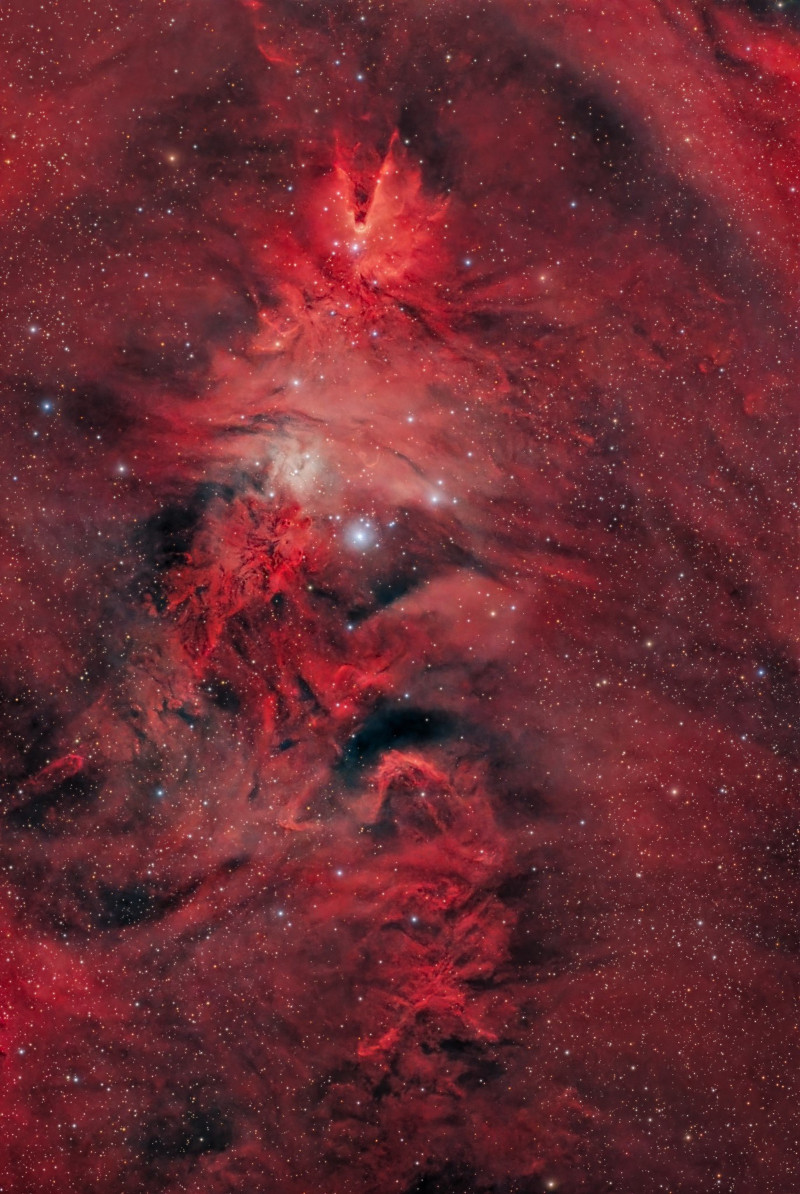
The Full Story
Key Takeaways
- 1 NGC 2264 is a star-forming region 2,700 light-years away in the Monoceros constellation, often called the Unicorn.
- 2 It contains visually striking nebulae known as the 'Unicorn,' 'Fox Fur,' and 'Christmas Tree' due to their unique shapes.
- 3 Studying stellar nurseries like NGC 2264 helps scientists understand how stars, planets, and ultimately solar systems, including our own, are born.
💡 Think of it this way:
Imagine a vast, colorful cloud in space acting like a giant, cosmic construction site where baby stars are being built from cosmic dust and gas, just like a sculptor shaping clay.
How We Know This
The breathtaking images of NGC 2264 are captured by powerful astronomical telescopes, often combining observations from different instruments and wavelengths of light. For instance, visible light telescopes reveal the glowing gas illuminated by young stars, while infrared telescopes can peer through the obscuring dust clouds, revealing even younger stars still hidden within their dusty cocoons. This multi-wavelength approach provides a comprehensive view of the complex processes at play in these stellar nurseries.
What This Means
Studying NGC 2264 and similar stellar nurseries is vital for advancing our understanding of the universe. It allows scientists to refine models of star and planetary system formation, providing clues about how common rocky planets might be. These insights also help us understand the chemical evolution of galaxies and the distribution of elements necessary for life. Furthermore, continued observations of such dynamic regions could reveal new types of celestial objects or unexpected phenomena, pushing the boundaries of our cosmic knowledge.
Why It Matters
This glimpse into a stellar nursery helps us understand how stars like our own Sun were formed, providing vital clues about the origins of planets and even life in the universe. It's a window into our cosmic past and future.