Back to Articles Image Of The Day

Cosmic Mystery: Little Red Dots Puzzle Early Universe Scientists

📖 4 min read 📊 beginner 🏷️ NASA APOD

In Brief

Astronomers are baffled by hundreds of mysterious 'little red dots' (LRDs) spotted by the James Webb Space Telescope in the early universe. These extremely faint objects are showing up frequently in deep space observations, sparking a lively debate about what they truly are and how they fit into our understanding of cosmic history.
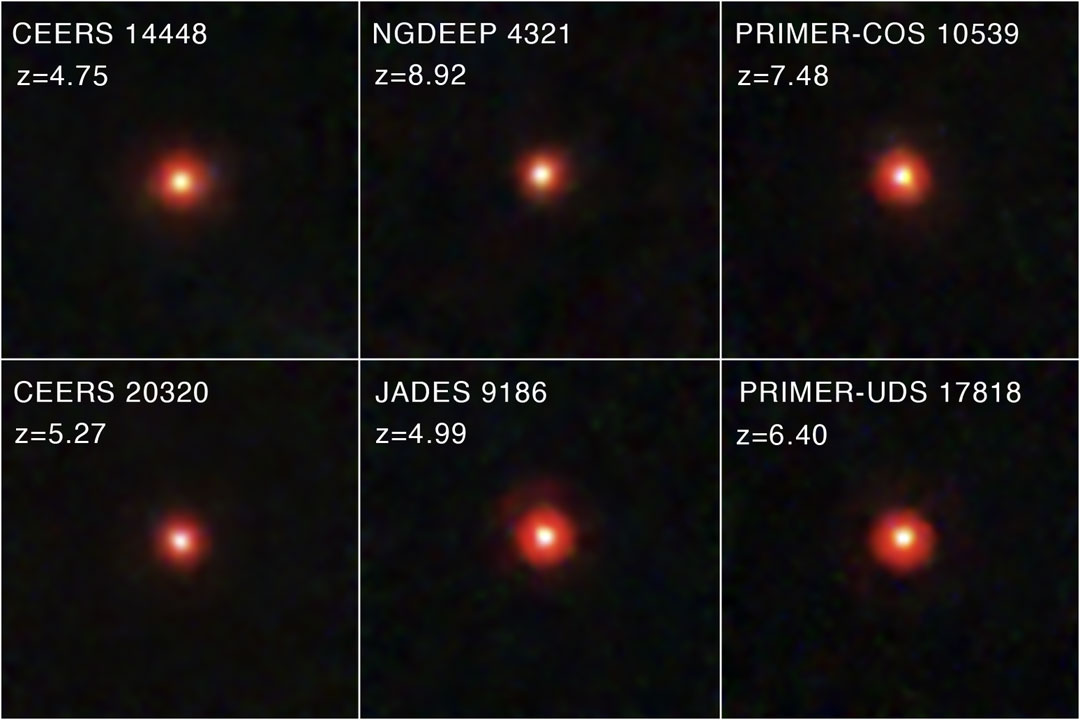
Cosmic Mystery: Little Red Dots Puzzle Early Universe Scientists

Disclosure: This post contains affiliate links. As an Amazon Associate, I earn from qualifying purchases.

The Full Story

The James Webb Space Telescope (JWST), our most powerful eye on the cosmos, has stumbled upon a perplexing new mystery: hundreds of incredibly faint 'little red dots' (LRDs) scattered across the early universe. Discovered just last year, these objects are so small and dim that they were previously undetectable. Now, thanks to JWST's unparalleled sensitivity, they're popping up unexpectedly in deep observations, challenging long-held theories about how the universe began. When we talk about the 'early universe,' we're looking back billions of years, to a time when the universe was just a fraction of its current age. This era, shortly after the Big Bang, is crucial for understanding how the first stars, galaxies, and even black holes came to be. Finding anything at all from this distant past is a monumental task, let alone hundreds of unidentified objects. Their 'red' appearance is a clue; it suggests they are either very distant (and thus, their light has been stretched to redder wavelengths by the expanding universe) or heavily shrouded in dust. Scientists are currently engaged in a wide-ranging debate, proposing several exciting possibilities for what these LRDs could be. Are they tiny, infant galaxies, still in their earliest stages of formation? Could they be the 'seeds' of supermassive black holes, much smaller than the colossal ones we see today, but already beginning their growth? Or might they represent an entirely new type of cosmic object, something we've never encountered before? Each theory presents its own set of challenges and implications for our current models of cosmic evolution. The unexpected abundance of these LRDs is what makes this discovery so significant. Our existing models of galaxy formation and the early universe don't fully account for such a high number of these specific types of objects. Their presence suggests that the early universe might have been far more dynamic and populated with small, intense sources of light than we previously thought. Understanding their nature could force a significant rewrite of our cosmic textbooks, offering a more complete picture of the universe's formative years. The James Webb Space Telescope is uniquely equipped to find these LRDs. Its primary strength lies in observing infrared light, which is crucial for seeing extremely distant and faint objects whose light has been 'redshifted' into the infrared spectrum. Even when JWST is conducting observations for other scientific goals, its incredible sensitivity and resolution allow it to inadvertently detect these elusive dots. This speaks volumes about its power and its potential to uncover even more unexpected phenomena. Moving forward, astronomers will use JWST's full suite of instruments to conduct targeted observations of these LRDs. By analyzing their light in more detail, they hope to determine their chemical composition, temperature, and motion. This information will be vital in narrowing down the possibilities and potentially identifying the true nature of these mysterious cosmic objects. The answers could reshape our understanding of everything from the birth of galaxies to the origins of the supermassive black holes lurking at the heart of most galaxies, including our own Milky Way.

Key Takeaways

  • 1 Hundreds of mysterious 'little red dots' (LRDs) have been discovered by the James Webb Space Telescope in the early universe.
  • 2 Their nature is unknown, sparking scientific debate about whether they are baby galaxies, black hole seeds, or something entirely new.
  • 3 The LRDs are extremely faint and abundant, challenging existing models of how the first structures in the universe formed.
  • 4 JWST's infrared capabilities are crucial for detecting these distant and redshifted objects.
  • 5 Future observations aim to analyze the LRDs in detail to unravel their cosmic identity.
Astrophysics for People in a Hurry

Astrophysics for People in a Hurry

Neil deGrasse Tyson's bestselling introduction to the universe. Essential reading for anyone curious about space.

Check Price on Amazon
*As an Amazon Associate, we earn from qualifying purchases.

💡 Think of it this way:

Imagine you're an archaeologist searching for the earliest human settlements, and suddenly you start finding tiny, unidentifiable artifacts everywhere you dig. These 'little red dots' are like those unexpected artifacts – small, numerous, incredibly old, and completely puzzling to scientists trying to piece together the universe's past.

How We Know This

The discovery was made using the James Webb Space Telescope (JWST), which is incredibly sensitive to infrared light. Because the universe is expanding, light from very distant objects gets 'stretched' to longer, redder wavelengths – the infrared spectrum. JWST's powerful mirrors and instruments allow it to capture this faint infrared light, essentially looking back in time to the early universe. These LRDs were often spotted in deep observations JWST was making for other purposes, highlighting its profound capability to reveal unexpected cosmic phenomena.

What This Means

The identification of these 'little red dots' could lead to a significant revision of our understanding of the early universe. If they are baby galaxies, it implies that star and galaxy formation began much earlier and more prolifically than previously thought. If they are black hole seeds, it could rewrite theories on how supermassive black holes grew so quickly. Ultimately, solving this mystery will provide crucial pieces to the puzzle of how the universe evolved from a uniform soup of particles into the complex tapestry of stars, galaxies, and planets we observe today.

Why It Matters

This discovery could revolutionize our understanding of how the very first galaxies and structures in the universe formed. By deciphering these mysterious dots, we might unlock secrets about our own cosmic origins and the evolution of everything we see around us today.

Related Topics

#EarlyUniverse #JWST #CosmicMystery #GalaxyFormation #AstronomyDiscovery