Back to Articles Image Of The Day

Jupiter's Cosmic Dance: Giant Planet Meets Dazzling Meteor Shower

πŸ“– 3 min read πŸ“Š beginner 🏷️ NASA APOD

In Brief

Imagine the king of our solar system, Jupiter, shining brightly while a shower of cosmic fireworks streaks across the sky around it! This stunning image captures a rare alignment, showcasing Jupiter as the backdrop for the dazzling Geminid meteor shower. It's a breathtaking reminder of the dynamic beauty constantly unfolding in our universe.
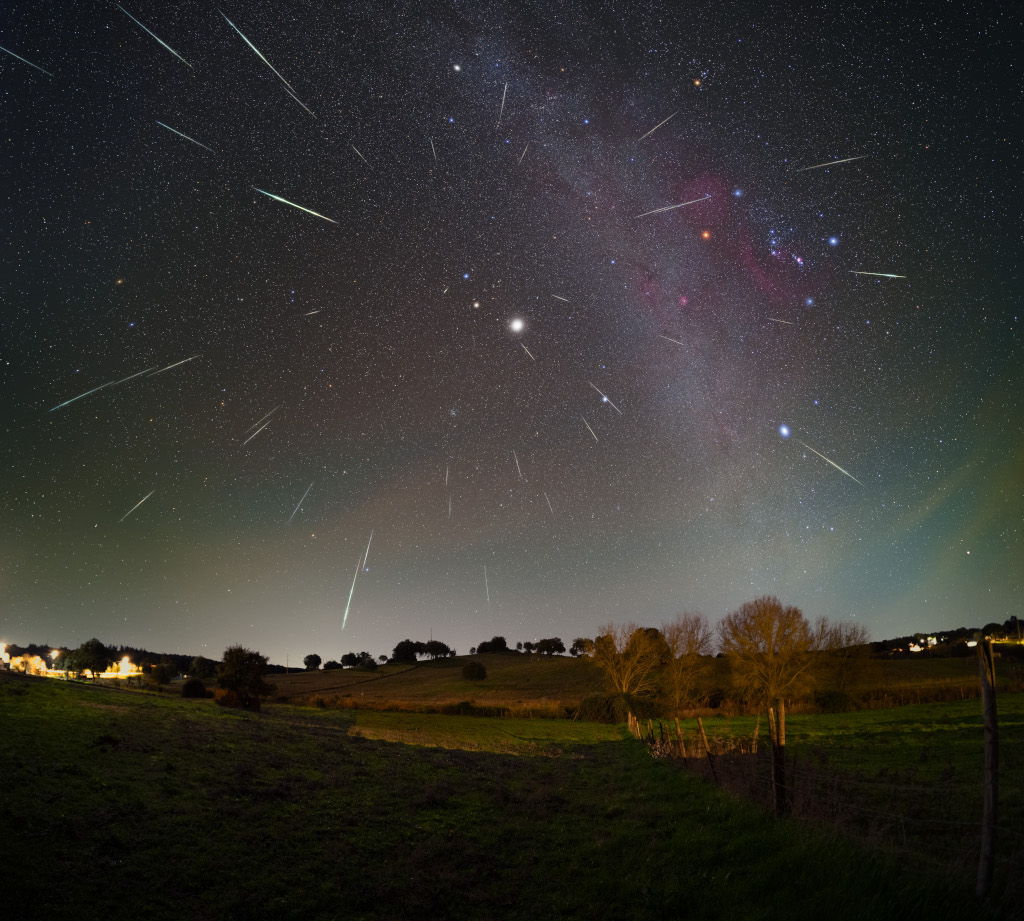
Jupiter's Cosmic Dance: Giant Planet Meets Dazzling Meteor Shower

Disclosure: This post contains affiliate links. As an Amazon Associate, I earn from qualifying purchases.

The Full Story

Imagine looking up at the night sky and witnessing a celestial spectacle where the largest planet in our solar system, Jupiter, plays the starring role, while a dazzling display of meteors streaks by! That's exactly what a recent composite image from NASA's Astronomy Picture of the Day (APOD) brought to life, capturing a breathtaking moment when Jupiter, our solar system's colossal gas giant, became the magnificent backdrop for the Geminid meteor shower. In this remarkable scene, Jupiter isn't just present; it's the undisputed brightest beacon, drawing our eyes with its steady, brilliant glow. Often referred to as the 'king' of planets, Jupiter's sheer size and reflective atmosphere make it an easy target for stargazers, even from light-polluted areas. Its commanding presence in the image emphasizes its dominance in our planetary neighborhood, reminding us of the immense scale of our solar system. While Jupiter provided the grand stage, the real fireworks came from the Geminid meteor shower. Unlike most meteor showers that originate from comets, the Geminids are unique, stemming from an asteroid named 3200 Phaethon. As Earth passes through the trail of debris left behind by Phaethon, tiny particles – often no bigger than grains of sand – burn up in our atmosphere, creating those spectacular 'shooting stars' we cherish. This particular image captures many of these transient streaks, painting a dynamic picture around our massive neighbor. Creating such a detailed and vibrant image isn't as simple as just pointing a camera. This particular masterpiece is a 'composite' – meaning it's stitched together from many different photographs. Astrophotographers meticulously selected 40 individual exposures that captured meteors out of a much larger set of about 500 images taken over two nights (December 13 and 14). By combining these specific frames, they were able to highlight the fleeting trails of dozens of meteors, creating an effect that you might see over hours, all compressed into one breathtaking snapshot. It’s like gathering all the best moments from a long movie into a single, epic poster. This stunning visual serves multiple purposes beyond its aesthetic appeal. Firstly, it offers a tangible connection to the celestial events happening above us, inspiring awe and curiosity about the universe. Secondly, it showcases the incredible skill and patience of astrophotographers who use technology to reveal hidden wonders. Finally, by combining scientific observation with artistic presentation, it makes complex astronomical phenomena accessible and engaging for everyone, encouraging more people to look up and appreciate the vastness of space.

Key Takeaways

  • 1 Jupiter, the largest planet, served as a brilliant, steady backdrop for the dynamic Geminid meteor shower.
  • 2 The Geminids are a unique meteor shower, originating from an asteroid (3200 Phaethon) rather than a comet.
  • 3 The image is a 'composite' masterpiece, combining dozens of individual photos to showcase many fleeting meteor trails alongside Jupiter in one spectacular view.
Hubble Space Telescope Deep Field Poster

Hubble Space Telescope Deep Field Poster

Stunning poster featuring iconic Hubble Space Telescope imagery. Perfect for space enthusiasts.

Check Price on Amazon
*As an Amazon Associate, we earn from qualifying purchases.

πŸ’‘ Think of it this way:

Think of Jupiter as a grand stage performer in a spotlight, and the meteors as tiny, glittering confetti being thrown across the stage during a spectacular finale.

How We Know This

This incredible image wasn't just a single snapshot. It's a 'composite' – a masterful blend of many individual photos. Photographers took hundreds of pictures over two nights during the peak of the Geminid shower. Then, they carefully chose the 40 photos that actually contained a meteor streak and stacked them together. This clever technique allows us to see dozens of fleeting meteors that appeared at different times, all in one glorious frame, alongside the constantly shining Jupiter.

What This Means

Capturing such events helps scientists and enthusiasts alike better understand the frequency and characteristics of meteor showers and how our solar system operates. For the public, these images are powerful tools for engagement, making astronomy feel immediate and personal. They inspire future generations of scientists and stargazers, encouraging further exploration and appreciation of our cosmic neighborhood. Expect more sophisticated imaging techniques to reveal even more intricate details of these celestial dance-offs.

Why It Matters

This isn't just a pretty picture; it connects us to the grand cosmic show happening above our heads every night. It reminds us of Earth's place in a dynamic solar system and inspires us to look up, fostering a sense of wonder and curiosity about space.

Related Topics

#Jupiter #Geminids #Meteor Shower #Astrophotography #Night Sky