Back to Articles Image Of The Day

The Soul Nebula: A Celestial Nursery Where Stars Are Born

πŸ“– 3 min read πŸ“Š beginner 🏷️ NASA APOD

In Brief

Gaze upon the magnificent Soul Nebula, a vast cloud of gas and dust located in the constellation Cassiopeia. This incredible cosmic region is a bustling factory where countless new stars are actively being formed, illuminating the heavens with their youthful glow.
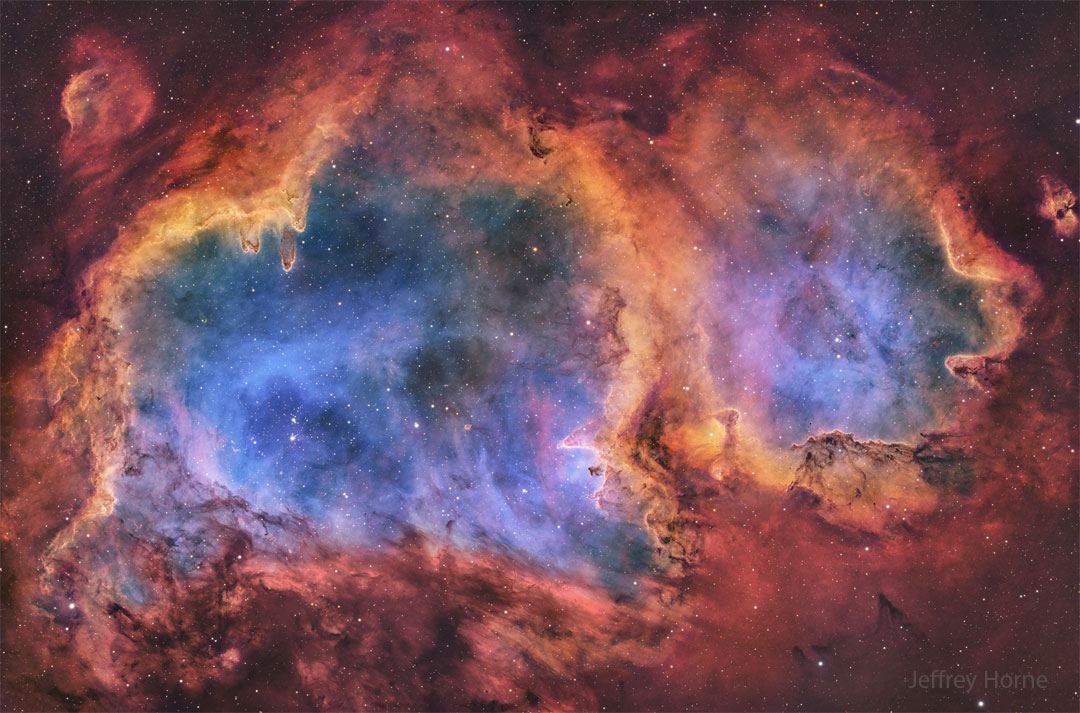
The Soul Nebula: A Celestial Nursery Where Stars Are Born

Disclosure: This post contains affiliate links. As an Amazon Associate, I earn from qualifying purchases.

The Full Story

Deep within the rich tapestry of our night sky, in the direction of the constellation Cassiopeia – often depicted as a queen on her throne – lies a breathtaking celestial wonder known as the Soul Nebula. Also cataloged as W5, this immense cloud of interstellar gas and dust is not just a pretty picture; it's one of the universe's most active and important star-forming regions. Its ethereal beauty and dynamic processes make it a prime target for astronomers eager to understand the birth of stars. Think of the Soul Nebula as a cosmic maternity ward, but for stars. Inside this enormous cloud, vast amounts of hydrogen gas and tiny dust particles are slowly pulled together by gravity. As these clumps grow denser and hotter, the pressure at their core eventually becomes so intense that nuclear fusion ignites. This is the moment a new star is born, blasting light and energy into its surroundings. The nebula itself glows brightly, energized by the powerful radiation from these newly minted, massive stars, creating a stunning light show across the light-years. The images we capture of the Soul Nebula are often vibrant and complex, painted with shades of red, pink, and blue. These colors tell a story: red typically indicates glowing hydrogen gas, while blue can come from starlight reflecting off dust. Its distinctive shape, resembling something organic and intricate, is what earned it the evocative name 'the Soul Nebula,' making it a truly captivating sight for astronomers and stargazers alike. It's a testament to the dynamic and artistic processes occurring on a grand scale across the cosmos. Studying regions like the Soul Nebula is crucial for understanding the lifecycle of stars, including our very own Sun. Our solar system was born from a similar cosmic cloud billions of years ago. By observing these stellar nurseries, scientists can gather vital clues about the conditions that lead to star formation, the different types of stars that emerge, and how these processes influence the evolution of galaxies over vast spans of time. It connects us directly to the grand narrative of cosmic creation. Every time we look at an image of the Soul Nebula, we’re not just admiring a distant beauty; we're witnessing the fundamental building blocks of the universe in action. It reminds us that the cosmos is a vibrant, ever-changing place, constantly creating and recreating, offering endless opportunities for discovery and wonder right above our heads. It’s a profound reminder of our place in the vast, interconnected universe.

Key Takeaways

  • 1 The Soul Nebula is a large star-forming region located in the constellation Cassiopeia.
  • 2 It acts as a 'cosmic nursery' where new stars are born from immense clouds of gas and dust.
  • 3 Observing this nebula helps scientists understand how stars, including our own Sun, form and evolve.
  • 4 The nebula's vibrant colors reveal the presence of different elements and energetic processes within it.
  • 5 It's a beautiful and dynamic example of ongoing creation in the universe.
National Geographic Planisphere Star Finder

National Geographic Planisphere Star Finder

Essential tool for identifying constellations and stars. Perfect for beginners learning the night sky.

Check Price on Amazon
*As an Amazon Associate, we earn from qualifying purchases.

πŸ’‘ Think of it this way:

Imagine a giant, glowing maternity ward in space, where all the ingredients for new baby stars are swirling together, ready to ignite.

How We Know This

Astronomers use powerful telescopes, both on Earth and in space (like NASA's orbital observatories), to capture the faint light emitted by the Soul Nebula. They often employ specialized cameras and filters to observe it in different wavelengths, including visible light (what our eyes see) and infrared. Infrared observations are particularly useful because they can peer through the thick dust clouds that block visible light, revealing the hidden 'baby stars' forming within.

What This Means

Continued studies of the Soul Nebula will help refine our models of star formation, shedding light on how planetary systems might emerge around these young stars. This research contributes to our broader understanding of galactic evolution and the potential for life to arise in other parts of the universe, providing crucial insights for future missions and observations aimed at exploring exoplanets and the origins of cosmic structures.

Why It Matters

Understanding places like the Soul Nebula helps us unravel the mysteries of how our own Sun and solar system came to be, offering a glimpse into the cosmic origins of everything around us.

Related Topics

#Star Formation #Nebula #Cassiopeia #Cosmic Nursery #Astronomy