Orion's Lunar Postcard: Gazing at the Moon's 'Ocean of Storms'
In Brief
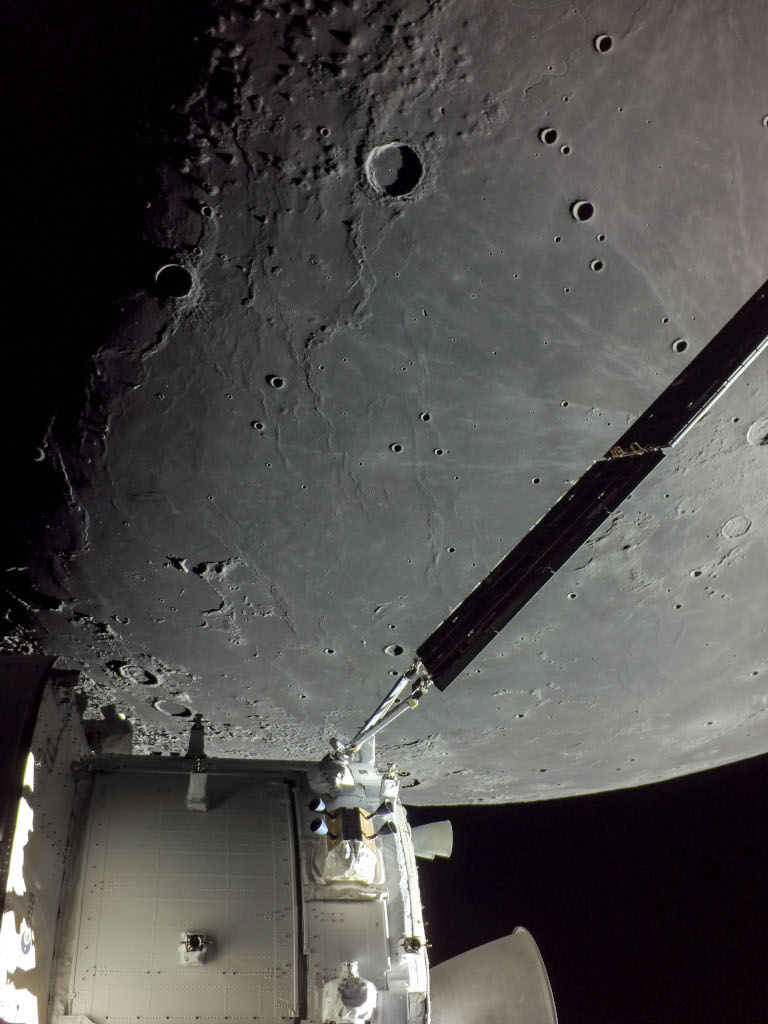
Imagine taking a selfie as you're leaving a giant, glowing orb! That's what NASA's Orion spacecraft did, snapping a breathtaking photo of the Moon's 'Ocean of Storms' during its journey back to Earth. This unique view offers a fresh perspective of our celestial neighbor, seen from the cutting edge of human exploration.
The Full Story
Key Takeaways
- 1 Orion spacecraft captured a unique view of the Moon's 'Ocean of Storms'.
- 2 This was during its return flyby as part of the uncrewed Artemis I mission.
- 3 The 'Ocean of Storms' is a vast, smooth plain formed by ancient lava flows, not water.
- 4 The image is vital for testing Orion's capabilities and planning future human lunar missions.
💡 Think of it this way:
Think of it like taking a magnificent 'space selfie' from a car window during a high-speed road trip around the world's biggest, closest landmark – in this case, the Moon!
How We Know This
The image was taken by an onboard camera on NASA's Orion spacecraft. As the uncrewed spacecraft performed a 'powered flyby' – a close approach to the Moon to use its gravity for a slingshot maneuver back to Earth – the camera captured the moonscape with one of Orion's wing-like solar panels in the foreground. This sophisticated imaging system helps engineers monitor the spacecraft's health and provides valuable data on the lunar environment.
What This Means
This image is a direct result of the Artemis I mission's success, which is crucial for preparing Orion for future human spaceflight. It helps engineers and scientists refine mission plans, identify potential landing sites, and test spacecraft systems. The data and imagery from this mission are laying the groundwork for Artemis II, which will carry astronauts on a lunar flyby, and Artemis III, which aims to land humans on the Moon, eventually setting the stage for human missions to Mars.
Why It Matters
This isn't just a pretty picture; it's a snapshot of humanity's return to the Moon. It showcases the Orion spacecraft's incredible journey, paving the way for astronauts to explore lunar landscapes once again and eventually venture even deeper into space.