Cosmic Cradle: Inside the Soul Nebula's Star-Forming Core
In Brief
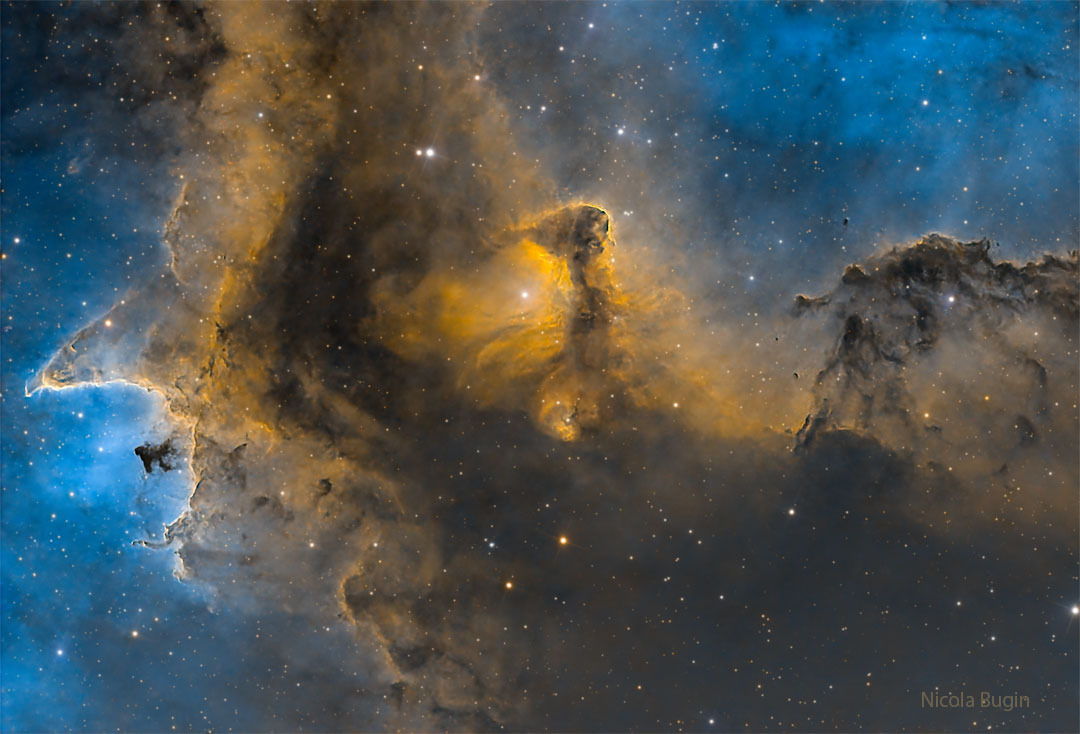
This breathtaking image offers a close-up view of a vibrant star-forming region, known as IC 1871, nestled deep within the vast Soul Nebula. It showcases dramatic dark dust clouds contrasted by brilliant ridges of glowing gas, illustrating where new stars are being born.
The Full Story
Key Takeaways
- 1 The image shows IC 1871, a region within the Soul Nebula where new stars are actively forming.
- 2 Dark dust clouds are the raw material for new stars, while bright glowing gas is illuminated by recently born, massive stars.
- 3 Observing these regions helps us understand the process of star formation and cosmic evolution.
💡 Think of it this way:
Imagine a cosmic sculptor's workshop, where vast clouds of gas and dust are slowly being molded by gravity and the energy of newborn stars into dazzling new celestial bodies.
How We Know This
This incredible image was captured using powerful telescopes, likely as part of NASA's Astronomy Picture of the Day (APOD) collection. Telescopes gather faint light that has traveled for thousands of years across the vastness of space. Specialized cameras then record this light, often across different wavelengths, allowing astronomers to see details and phenomena that are invisible to the naked eye.
What This Means
Understanding regions like IC 1871 is fundamental to unraveling the mysteries of our universe. It sheds light on how all stars, including our own Sun, and their accompanying planetary systems, came to be. This knowledge helps us better understand the conditions necessary for life to emerge elsewhere in the cosmos and provides a deeper context for Earth's own origins. Future studies will continue to monitor these regions, observing how young stars interact with their environments, shaping the next generation of cosmic structures.
Why It Matters
This stunning cosmic snapshot helps us understand how stars, including our own Sun, came into existence. By observing these distant 'stellar nurseries,' we gain insights into the building blocks of the universe and our place within it.