Unraveling the Mystery: Why Our Sun's Rainbow Has Gaps
In Brief
Scientists are still puzzled by the 'missing colors' in the Sun's spectrum—the specific dark lines that interrupt its otherwise brilliant rainbow. These gaps are like fingerprints, telling us about the Sun's makeup, but exactly how they form remains a cosmic enigma. Understanding them is key to truly knowing our star.
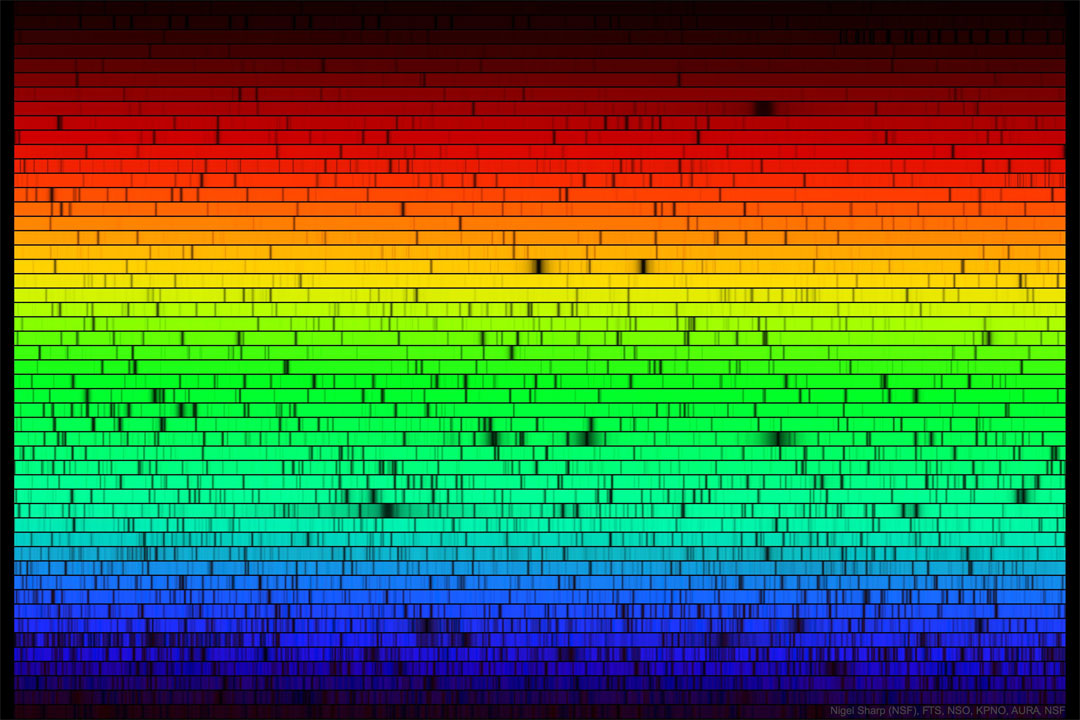
The Full Story
Key Takeaways
- 1 Sunlight, when split into a rainbow (spectrum), contains dark gaps or 'missing colors.'
- 2 These gaps are caused by elements in the Sun's atmosphere absorbing specific wavelengths of light.
- 3 While we know which elements cause these lines, the precise details of their formation and why they appear as they do are still a mystery.
- 4 Understanding these lines is crucial for diagnosing the Sun's conditions and predicting space weather.
💡 Think of it this way:
Imagine sunlight as a beautiful, continuous song. When we listen closely with a special instrument, we notice specific notes are missing—like silent spots in the melody. These missing notes are the 'colors' absorbed by different parts of the Sun, and scientists are trying to figure out why these particular notes vanish.
How We Know This
Scientists use a special instrument called a spectrograph, which acts like a super-powerful prism. It takes sunlight and splits it into its individual colors (wavelengths) with incredible precision. This allows them to see the tiny dark lines—the 'missing colors'—that are otherwise invisible to the naked eye. The image mentioned was created at the McMath-Pierce Solar Observatory, a facility dedicated to studying the Sun.
What This Means
Solving the mystery of the Sun's 'missing colors' will lead to a more complete understanding of our star's composition, temperature, and dynamic processes. This improved knowledge will allow for more accurate predictions of space weather events, better protection for our technology and astronauts, and a deeper insight into the fundamental physics governing all stars in the universe.
Why It Matters
Understanding these 'missing colors' helps us decode the Sun's inner workings, much like a doctor reads an X-ray. Since the Sun fuels life on Earth and influences everything from our climate to satellite communications, deciphering its signals is vital for predicting space weather and safeguarding our technology.