M77: A Galaxy's Bright, Active Heart Revealed!
In Brief
Astronomers have peered into the heart of the spiral galaxy M77, located 47 million light-years away, revealing its incredibly bright and active core. This galaxy's center is powered by a supermassive black hole, making it a fascinating target for understanding these cosmic giants and how they influence their host galaxies.
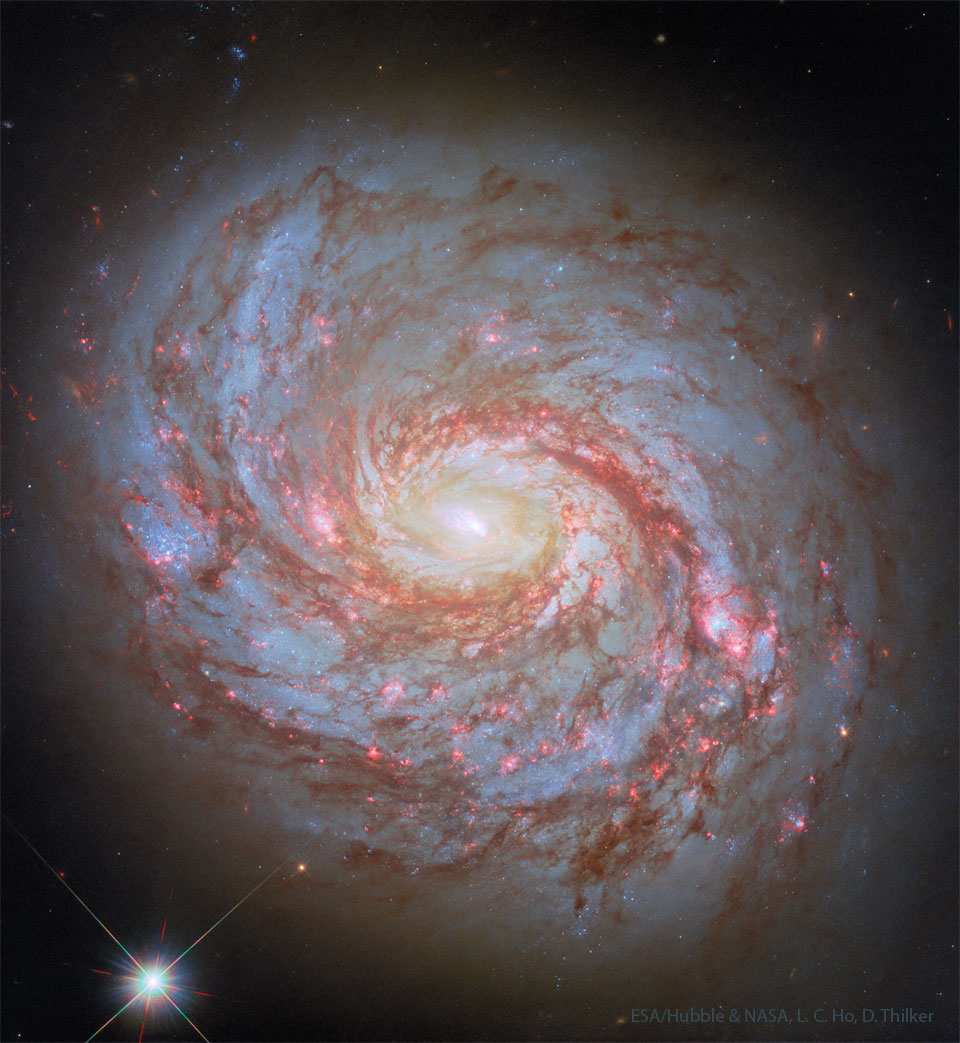
The Full Story
Key Takeaways
- 1 M77 is a spiral galaxy with an active galactic nucleus.
- 2 The galaxy's core shines brightly across many wavelengths.
- 3 The supermassive black hole is the engine driving the galaxy's activity.
💡 Think of it this way:
Imagine a cosmic lighthouse beaming energy across the universe. M77's core is similar, radiating light across the electromagnetic spectrum because of the intense activity around its central black hole.
How We Know This
The sharp image of M77 was captured by the Hubble Space Telescope. Hubble uses its powerful lenses to gather light, like a giant eye, and then specialized instruments break the light into its component colors. This allows astronomers to see details in the galaxy's structure, such as its spiral arms, dust clouds, and the intense radiation from its active core. By observing at different wavelengths, scientists can piece together a comprehensive picture of the processes happening within M77.
What This Means
Studying galaxies like M77 provides insights into how supermassive black holes influence their host galaxies' evolution. These black holes can trigger bursts of star formation or suppress it, affecting the overall shape and composition of the galaxy. Future telescopes, like the James Webb Space Telescope, will provide even more detailed observations, allowing us to further unravel the mysteries of active galactic nuclei and the co-evolution of black holes and galaxies.
Why It Matters
Understanding active galaxies like M77 helps us learn about the evolution of galaxies, including our own Milky Way, and the powerful role that black holes play in shaping the universe. It's like understanding the engine that drives a car to better understand how the whole vehicle works.