Back to Articles Image Of The Day

Ghostly Remnants of an Ancient Exploding Star: The Witch's Broom Nebula

📖 5 min read 📊 beginner 🏷️ NASA APOD

In Brief

About 10,000 years ago, a star exploded, creating a supernova. Today, we see the expanding remains of this explosion as the Veil Nebula, also known as the Witch's Broom. This stunning image captures the glowing gas and dust as they interact with interstellar space.
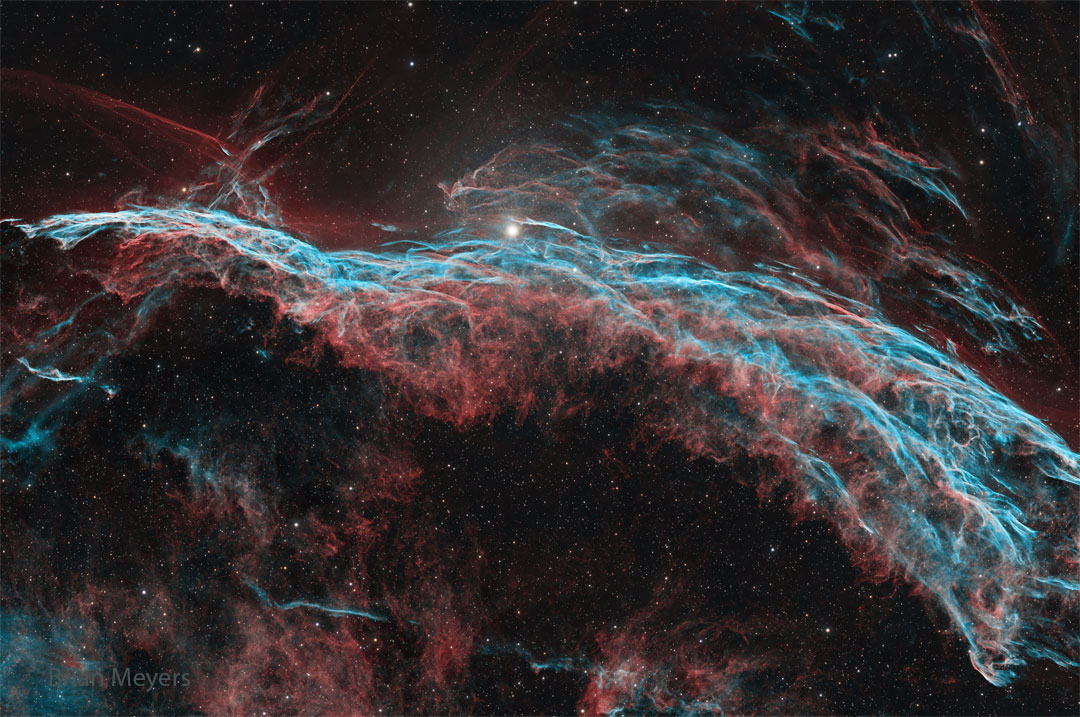
Ghostly Remnants of an Ancient Exploding Star: The Witch's Broom Nebula

The Full Story

Ten thousand years ago, long before any written records, a brilliant light would have suddenly appeared in the night sky, eventually fading away after a few weeks. This was a supernova, the explosive death of a massive star. Today, we can see the expanding debris cloud from this ancient explosion as the Veil Nebula, a beautiful and complex structure spanning a vast area of space. This new image focuses on a section of the Veil Nebula called NGC 6960, often referred to as the Witch's Broom Nebula. This name comes from its wispy, filamentary appearance, which resembles the bristles of a broom. The image shows the shockwave from the supernova as it plows through interstellar space, sweeping up and exciting the gas and dust that exist between the stars. The colorful glow in the image comes from different elements that have been heated and ionized by the supernova's shockwave. Red hues indicate the presence of hydrogen, while blue-green colors represent oxygen. The way these colors are distributed reveals the intricate structure of the nebula and how the shockwave is interacting with the surrounding material. The Veil Nebula is located about 1,400 light-years away in the constellation Cygnus. While seemingly close together in the image, the bright star 52 Cygni is actually much closer to us and not related to the supernova remnant. The Witch's Broom itself spans about 35 light-years, a truly enormous structure born from a cataclysmic event. Studying supernova remnants like the Veil Nebula helps astronomers understand the life cycle of stars and how heavy elements are distributed throughout the universe. These explosions are responsible for creating many of the elements that make up our planet and even ourselves, making them essential to the evolution of the cosmos.

Key Takeaways

  • 1 Supernovas seed the universe with heavy elements.
  • 2 The Veil Nebula is the remnant of a 10,000 year old supernova.
  • 3 The 'Witch's Broom' is a section of the Veil Nebula.
Hubble Space Telescope Deep Field Poster

Hubble Space Telescope Deep Field Poster

Stunning poster featuring iconic Hubble Space Telescope imagery. Perfect for space enthusiasts.

$14.99
View on Amazon
*As an Amazon Associate, we earn from qualifying purchases. Price and availability may vary.

💡 Think of it this way:

Imagine dropping a pebble into a pond. The ripples are like the shockwave from the supernova, and the water represents the interstellar material. As the ripples spread, they interact with everything in the pond, just like the supernova remnant interacts with space.

How We Know This

This image was created using telescopes and special filters that isolate specific wavelengths of light emitted by different elements, such as hydrogen and oxygen. By combining these filtered images, astronomers can create a colorful representation of the nebula's composition and structure.

What This Means

Further study of supernova remnants like the Veil Nebula will help us understand the processes that occur in the aftermath of a star's death, including how the expanding debris cloud interacts with the interstellar medium and how heavy elements are dispersed throughout space. It also helps us understand the frequency of such events in our galaxy.

Why It Matters

Supernova remnants like the Witch's Broom offer us a glimpse into the violent end of massive stars and how these events seed the universe with the elements needed for new stars and planets to form. It's like cosmic recycling on a grand scale!

Related Topics

#supernova #nebula #astronomy #space #witch's broom